Our Short List of 3
All 3 Picks at a Glance
| Product | Specs | Action |
|---|---|---|
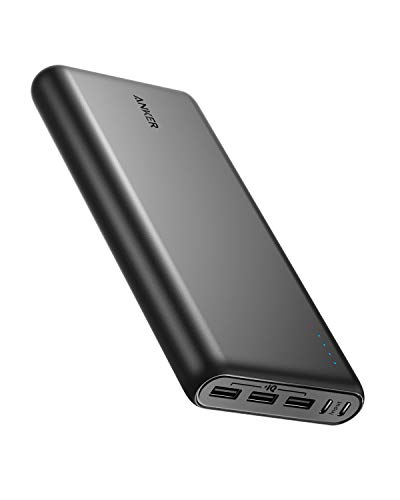 1. Anker 337 Power Bank (PowerCore 26K) | Check price on Amazon | |
 2. INIU 20,000mAh 65W Portable Charger | Check price on Amazon | |
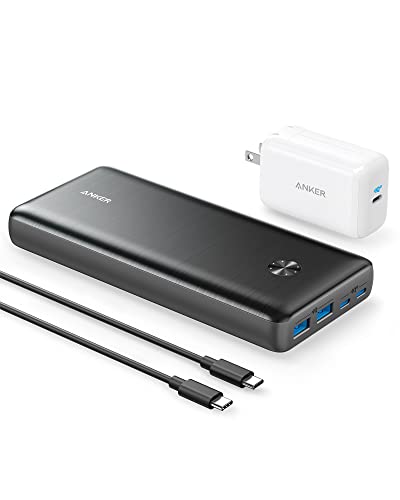 3. Anker 747 Power Bank (PowerCore 26K for Laptop) | Check price on Amazon |
Key takeaways
- Compare large portable battery packs with big capacity at an affordable level: Anker 26,800mAh and INIU 20,000mAh picks, explained in plain terms with no prices quoted.
As an Amazon Associate we earn from qualifying purchases.
Affiliate Disclosure: This article contains affiliate links. If you buy through a link on this page, we may earn a commission at no extra cost to you. Specifications below are taken from the manufacturers’ Amazon listings, not from detailed research by our team, so confirm the details on the listing before ordering.
What “cheap” and “large” mean for a portable battery pack
A large portable battery pack is a power bank built to keep several devices running for days, not hours. In this guide, large means a rated capacity of 20,000 milliamp-hours or more. A pack in that range can recharge a typical phone several times over, top up a tablet more than once, and in the stronger models give a USB-C laptop a useful charge. That is the practical difference between a pocket top-up charger and a pack you buy when you are travelling, camping, working away from outlets, or keeping a household kit ready for outages.
Cheap, in this guide, is a relative idea, not a number. A large pack costs more than a small one because it contains more cells, but the packs below sit at the affordable end of the large-capacity range. They do that by using proven, older designs or by focusing on one strength — capacity and reliability — rather than charging extra for the newest display, the fastest wattage, or a premium shell. The goal is the most usable energy for the money, not the most features on the box.
One spelling note: the keyword for this guide is written as “portablle” in the original search phrase. That is a misspelling of “portable”, and it is kept exactly as written in the keyword and page address so the page matches the search. Everywhere else in this article the word is spelled correctly.
How much capacity do you actually need
Capacity is measured in milliamp-hours, and the number on the box is the capacity of the cells inside, not the amount of energy that reaches your phone. Conversion losses in the charging circuit and the voltage step-up mean a pack delivers roughly three-fifths to two-thirds of its rated capacity as usable charge. That is normal for every power bank, not a defect in any particular model.
With that in mind, here is how the tiers work out in practice. A 20,000 milliamp-hour pack gives about three to four full phone charges, or around one and a half to two tablet charges. A 26,800 milliamp-hour pack gives about six phone charges or about two tablet charges, according to the manufacturer’s own description of the Anker model below. If you are charging a phone and a tablet together over a long weekend, the larger tier is the safer choice. If you mainly need a phone top-up reserve for travel days, the 20,000 tier is lighter and easier to carry.
There is also an airline limit worth knowing. Most airlines allow lithium batteries up to 100 watt-hours in carry-on luggage without special approval. A 26,800 milliamp-hour pack at the usual 3.7 volt nominal cell voltage sits just under that limit, which is why several manufacturers describe packs of this size as flight-safe. Packs above that capacity exist, but they can need airline approval, so a large pack in the 20,000 to 26,800 range is the sweet spot for travellers who fly.
What to check before you buy
Capacity is only the first filter. Four other things decide whether a large pack is pleasant to live with.
First, output ports. A large pack should charge at least two devices at once, because the whole point of carrying a big pack is sharing it between a phone, earbuds, a tablet, or a travelling companion’s phone. Three USB outputs is a comfortable number. Check the connector types too: older large packs may have only USB-A outputs and no USB-C port, which means your USB-C devices still charge, but only through a USB-A to USB-C cable.
Second, input and recharge time. A large pack holds a lot of energy, and refilling it can take a long time. Dual-input designs that accept two charging cables at once cut that time substantially. Modern USB-C power delivery inputs recharge faster still, and a pack with a high-wattage USB-C output can also charge a laptop, which changes what the pack is for.
Third, weight and size. A 26,800 milliamp-hour pack weighs roughly a pound, and a 20,000 milliamp-hour pack weighs a little less. That is fine in a backpack or a carry-on, but it is not a pocket item. If you plan to carry it in a jacket pocket all day, the smaller capacity tier is the better compromise.
Fourth, the cable situation. Some packs include a built-in cable, some include a short cable in the box, and some include no charging cable at all. Built-in cables are convenient because you cannot forget them, but they also mean the cable cannot be replaced if it wears out. Check what is in the box before you order, and keep a spare cable in your bag either way.
Our picks at a glance
- Anker 337 Power Bank, PowerCore 26K — the biggest capacity here at 26,800 milliamp-hours, with three USB-A outputs and dual Micro-USB inputs for faster refilling.
- INIU 20,000mAh 65W Portable Charger — the modern pick, with 65-watt USB-C power delivery for laptops, three outputs, and a digital display.
- Anker 747 Power Bank, PowerCore 26K for Laptop — a 25,600 milliamp-hour bundle with a wall charger included, built for USB-C laptops as well as phones and tablets.
1. Anker 337 Power Bank (PowerCore 26K)
The Anker 337, model A1277, is the classic large power bank: a 26,800 milliamp-hour pack with three USB-A outputs, no USB-C port, and two Micro-USB inputs that work together to refill the pack faster than a single input would. Anker describes it as able to charge most phones more than six times and tablets at least twice, and it measures about 7.09 by 3.21 by 0.87 inches at about 1.1 pounds. The listing states an 18-month warranty and includes two Micro-USB cables and a travel pouch in the box.
This is the pick for buyers who want maximum capacity at the affordable end of the range and do not mind an older connector layout. The three USB-A outputs mean a phone, a tablet, and a pair of earbuds can all charge at the same time, and the dual-input arrangement addresses the one real weakness of a pack this size: the time it takes to recharge itself. Used with both inputs, the manufacturer lists a recharge time of about six and a half hours, which is reasonable for an overnight refill.
The trade-off is the lack of a USB-C port. You will need a USB-A to USB-C cable for modern phones and tablets, and the pack cannot fast-charge a USB-C laptop. It also has no digital display, so charge level is shown by indicator lights rather than a percentage. None of that matters if your priority is raw capacity and proven reliability at a modest level of spend, but buyers who live entirely on USB-C should look at the INIU or the Anker 747 below instead.
Choose the Anker 337 if you want the largest capacity in this guide, you are happy with USB-A charging, and you want a long-running, well-reviewed design rather than the newest features.
2. INIU 20,000mAh 65W Portable Charger
The INIU 65-watt pack is the modern counterpoint to the Anker 337. It holds 20,000 milliamp-hours and delivers up to 65 watts through its USB-C power delivery output, which is enough to charge a 14-inch laptop at full speed according to the manufacturer’s description, as well as phones, tablets, and handheld consoles. It has three outputs in total: a 65-watt USB-C port, a 36-watt USB-C port, and a USB-A port, plus a digital display and an integrated pull-out phone stand. The manufacturer offers a three-year warranty and lifetime technical support, and the box includes a USB-C to USB-C cable and a travel pouch.
At 20,000 milliamp-hours this pack is a step down in total energy from the Anker 337, but it is also smaller and lighter, and its wattage makes it far more versatile. A phone charges quickly, a tablet charges quickly, and a laptop gets a real charge rather than a slow trickle. The manufacturer’s own estimate is about three and a half charges for a recent large phone, or about one and a half charges for a tablet, which is plenty for a travel day or a long work session away from an outlet.
The pull-out phone stand is a small detail that turns out to matter on planes and trains, where it holds the phone upright for hands-free viewing while it charges. The digital display is genuinely useful on a pack this size, because it shows the remaining charge as a number rather than a row of lights, so you can tell at a glance whether you have enough left for one more phone charge or need to find an outlet.
Choose the INIU if your devices are mostly USB-C, if you want to charge a laptop as well as a phone, and if you would rather carry a lighter pack with faster output than the absolute largest capacity.
3. Anker 747 Power Bank (PowerCore 26K for Laptop)
The Anker 747, model A1291, is a bundle: a 25,600 milliamp-hour power bank paired with a 65-watt USB-C wall charger. The bank itself has four ports and is built for laptops as well as phones and tablets, and the included wall charger means you can refill the pack quickly and also charge a laptop directly from the wall when an outlet is available. The manufacturer describes the capacity as enough to keep phones and tablets charged for days or to give a USB-C laptop a full charge.
This is the pick for a traveller who wants one kit that covers both jobs. The bundle solves the recharge problem that affects every large pack: a 25,600 milliamp-hour bank takes a long time to refill from a weak charger, so including a proper 65-watt wall charger in the box is a practical advantage rather than a gimmick. It also means you carry one fewer separate charger, because the same wall unit charges the bank, the laptop, and the phone.
The trade-off is bulk. A 25,600 milliamp-hour bank plus a wall charger is a heavier carry than the INIU alone, and this bundle sits at the higher end of the affordable range in this guide. It is best suited to a backpack or a work bag rather than a small day bag. If you only charge phones, the Anker 337 gives you more capacity for less bulk. If you charge a laptop regularly, the 747 is the more complete answer.
Choose the Anker 747 if you travel with a USB-C laptop, you want the wall charger included so the big bank refills quickly, and you are happy to carry a slightly heavier kit in exchange for that completeness.
Comparing the three picks
| Feature | Anker 337 | INIU 65W | Anker 747 bundle |
|---|---|---|---|
| Capacity | 26,800mAh | 20,000mAh | 25,600mAh |
| USB-C output | None | 65W and 36W | Yes, laptop rated |
| USB-A outputs | Three | One | Included in four ports |
| Display | Indicator lights | Digital display | Digital display |
| Wall charger included | No | No | Yes, 65W |
| Best for | Maximum phone and tablet charges | USB-C devices and laptops, lighter carry | Laptop travellers who want a complete kit |
No single pick wins on every row. The Anker 337 wins on capacity, the INIU wins on modern output and portability, and the 747 wins on completeness for laptop users. Match the row that matters most to your own devices and your answer will be clear.
Mistakes to avoid with large power banks
The most common mistake is buying capacity you will never use. A 26,800 milliamp-hour pack is the right call for multi-day trips, family travel, or outage kits. For a daily commute, it is dead weight, and a 20,000 milliamp-hour pack is already generous.
The second mistake is ignoring the recharge side. A large pack that takes all night to refill is fine if you charge it overnight, but a frustration if you need it again the next morning. Dual-input designs and high-wattage USB-C inputs exist precisely for this reason, so check the input specification, not just the output.
The third mistake is buying from an unknown brand to save a small amount. A power bank is a lithium battery you carry against your body and in your luggage, and the brands in this guide have long track records, published specifications, and warranty support. An unbranded pack with an inflated capacity claim is not a bargain; it is a risk.
Finally, remember that rated capacity is not delivered capacity. Every pack in this guide loses a portion of its energy to conversion, so compare packs by their rated numbers and by the manufacturer’s own charge estimates, not by imagining that a 26,800 milliamp-hour pack will deliver all of that energy to your phone.
Frequently asked questions
Is a 26,800mAh power bank allowed on a plane?
Packs of this size are generally described as flight-safe because they sit just under the usual 100 watt-hour carry-on limit for lithium batteries. Airline rules vary, so confirm with your carrier before flying, and always carry power banks in carry-on luggage, never in checked baggage.
How many times will a large pack charge my phone?
It depends on your phone’s battery size, but as a rough guide a 20,000 milliamp-hour pack gives about three to four full phone charges and a 26,800 milliamp-hour pack gives about six, after conversion losses. Tablets take much more energy, so expect about one and a half to two full tablet charges from these packs.
Why does my large pack take so long to recharge?
Because it holds a lot of energy. A pack refilled through a single low-power input can take most of a day, while dual-input and high-wattage USB-C designs refill in a few hours. If fast refilling matters to you, choose a pack with a strong input specification and pair it with a suitable wall charger.
Do I need USB-C on a power bank?
Not necessarily. USB-A outputs charge most phones and tablets perfectly well with the right cable. USB-C matters if you want to charge a laptop, if you want the fastest phone charging, or if you want one cable type for everything you carry.
Can a power bank charge a laptop?
Only some can. A laptop needs a USB-C power delivery output of enough wattage, typically 45 watts or more for smaller laptops and 65 watts for larger ones. The INIU and Anker 747 picks in this guide are built for that; the Anker 337 is not.
The bottom line
A cheap large portable battery pack is not the cheapest pack on the shelf, and it is not the largest pack anyone makes. It is the point where capacity, reliability, and affordability meet. The Anker 337 gives the most capacity for the money in a proven USB-A design. The INIU 65-watt pack gives modern USB-C charging and laptop support in a lighter body. The Anker 747 bundle gives laptop travellers a complete kit with the wall charger included. Any of the three is a sound buy; the right one depends on what you plug into it.