We independently review everything we recommend. When you buy through our links, we may earn a commission. As an Amazon Associate we earn from qualifying purchases.
Best 250 Four Stroke Dirt Bike: 5 Trail and Enduro Picks Compared
Looking for the best 250 four stroke dirt bike? Compare five 250cc four-stroke trail and enduro bikes, their engines, gearboxes, and wheels before you buy.
Looking for the best 250 four stroke dirt bike? Compare five 250cc four-stroke trail and enduro bikes, their engines, gearboxes, and wheels before you buy.
The best 250 four stroke dirt bike for most trail riders is a full-size, air-cooled four-stroke with a manual clutch, electric start, and 21-inch front and 18-inch rear wheels. That combination gives you usable low-end torque, a forgiving power delivery for learning clutch control, and wheels large enough to roll over ruts, roots, and rocks without constant deflection. The short answer: the X-PRO Templar 250cc is the strongest all-round pick you can buy as a complete bike on Amazon, thanks to its true 249.9cc Zongshen four-stroke engine, five-speed manual transmission, and full lighting. The other four bikes below suit different priorities, from a six-speed gearbox to dual-sport road legality.
One honest note up front: the major Japanese-brand 250 four-stroke motocross bikes are not sold as complete bikes on Amazon US. The 250-class four-stroke bikes listed there are budget-built machines, mostly from X-PRO, powered by Zongshen engines. They cost far less than a dealership motocrosser and work well for trail riding and learning, but they are not race bikes. This guide compares what is actually listed, with real displacements stated plainly.
Every bike in this guide is sold as a 250cc machine, but none of them displaces exactly 250cc. The two Templar models use a 249.9cc Zongshen engine, which is effectively a true 250. The DB-K018 uses a 232.6cc engine, the Cavalier uses a 229cc engine, and the Hawk-X uses a 223cc engine. That spread matters: the 249.9cc engines make the most power in the group, while the 223cc Hawk-X trades displacement for its enduro-focused chassis. When you compare bikes, look at the stated engine code and displacement in the specification table, not just the headline number. A four-stroke in this class delivers smooth power with strong torque at low revs, which makes it easier to ride on tight trails than a peaky two-stroke of the same size. It also runs on straight gasoline with no oil mixing, which simplifies fueling and maintenance.
Four-Stroke Power Delivery for Trail Riding
A 250 four-stroke is the classic trail-riding sweet spot because it pairs manageable power with enough torque to climb hills and pull out of mud without constant clutch work. Compared with a 125cc four-stroke, a 250 pulls harder from low revs and carries an adult rider more easily. Compared with a 450cc four-stroke, it is lighter, less tiring, and far more forgiving when you make a mistake. For a new rider, that forgiveness is the whole point: you can learn clutch and throttle control without fighting a bike that wants to wheelie at every throttle opening. For an experienced rider, a 250 four-stroke is still plenty for woods riding and fire roads, even if it will not match a full motocross bike on a track.
Transmission and Starting
All five bikes here use a manual clutch and a multi-speed gearbox, which is exactly what you want in a full-size dirt bike. A manual transmission lets you choose the right gear for a hill climb, a sand section, or a slow technical stretch. The Templar X stands out with a six-speed gearbox, which gives you a taller top gear for open stretches. The other four use five-speed gearboxes, which is standard for this class and perfectly adequate for trail work. Starting matters too: every bike here offers electric start, and most add a kick starter as a backup. Electric start is a real convenience when you stall on a hillside, and a kick backup means a flat battery does not end your ride.
Wheels, Suspension, and Seat Height
Full-size dirt bikes in this class run a 21-inch front wheel and an 18-inch rear wheel, and all five picks follow that pattern. Big wheels roll over obstacles more easily and give the bike stability at speed. Suspension is where budget bikes show their limits: expect basic inverted front forks and a simple rear shock rather than the fully adjustable units on a premium motocrosser. That is fine for trail riding at a moderate pace, but budget suspension will feel soft and under-damped if you jump the bike or ride fast whoops. Seat height is the other number to check. These bikes sit around 35 to 36 inches at the seat, which suits most adult riders but can be tall for shorter riders. Check the stated seat height against your inseam.
Lights, Street Legality, and Where You Can Ride
Some 250 four-stroke dirt bikes are pure off-road machines, while others are dual-sport bikes with headlights, tail lights, turn signals, a horn, and mirrors. The Cavalier 250 is the dual-sport pick here, with full road equipment and EPA approval, and the Hawk-X and Templar models carry lights as well. If you want to ride between trails on public roads, you need a bike that can be registered in your state. The Manufacturer Statement of Origin and bill of sale arrive by separate mail, so plan for that delay before you try to register anything. Several of these bikes also cannot be sold to California, so check your state rules before ordering. Confirm that your local trails allow motorized bikes, and never assume a dirt bike is road legal just because it has a headlight.
Size, Weight, and Rider Fit
A full-size 250 four-stroke dirt bike weighs roughly 230 to 290 pounds and carries a stated rider weight capacity between about 175 and 330 pounds, depending on the model. That range is wide, so check the capacity figure for the specific bike you are considering rather than assuming all 250s are the same. Heavier riders should favor the models with higher stated capacities. Overall length runs around 82 to 87 inches, so make sure you have room to store and transport the bike. These bikes ship in a crate and need assembly: handlebars, front wheel, brakes, and mirrors, plus fluids and a battery connection. If you are not comfortable with that work, budget for a local shop to assemble the bike and check the fasteners, chain tension, and brakes before your first ride.
Assembly, Paperwork, and Ongoing Maintenance
Because these bikes ship crated, assembly quality is part of the ownership experience. Expect to install the handlebars, mount the front wheel, connect the battery, and check every bolt before riding. The listings note that most of these bikes arrive about 95 percent assembled, with final steps left to the buyer. After assembly, change the oil early, check the spokes and chain after the first few rides, and clean the air filter often, because dusty trail riding clogs filters fast. Parts availability is another practical point: X-PRO sells replacement parts through its own channels, but you will not find parts at every local dealer the way you would for a major-brand bike.
The X-PRO Templar 250cc is the best overall pick in this group because it pairs a true 249.9cc four-stroke Zongshen engine with a five-speed manual transmission, electric and kick start, full lighting, and full-size 21-inch front and 18-inch rear wheels. The 249.9cc displacement is the largest in this comparison, and the engine makes a claimed 19 horsepower, which is the strongest output figure among the five bikes here. The Templar is built for adult trail riders who want a complete, ready-to-assemble package. Its inverted front forks, hydraulic disc brakes, and lighting kit cover the standard equipment you would expect at this level. One limitation to note: like the other bikes here, it cannot be sold to California, and it ships in a crate that needs assembly. For a rider who wants the most displacement in this class, the Templar is the natural first choice.
X-PRO Templar X 250cc Dirt Bike — Best for Riders Who Want a Sixth Gear
Runner-Up
X-PRO Templar X 250cc Dirt Bike — Best for Riders Who Want a Sixth Gear
The X-PRO Templar X 250cc shares the Templar’s 249.9cc Zongshen four-stroke engine but adds a six-speed manual transmission, which is the standout feature in this entire comparison. A sixth gear gives you a taller cruising gear for open fire roads and a wider spread of ratios overall, so the engine spends less time buzzing at high revs between trails. Like the standard Templar, it runs full-size 21-inch front and 18-inch rear wheels and is aimed at adult riders. The Templar X is the pick for a rider who already knows how to use a clutch and wants more gearing flexibility, or for someone who rides a mix of tight woods and faster open ground where the extra gear genuinely helps. The trade-off is the same as with the rest of this class: it is a budget-built bike that needs careful assembly and a break-in period. If the six-speed gearbox appeals to you, this is the only bike in the group that offers it.
X-PRO 250cc Dirt Bike (DB-K018) — Best Straightforward Trail Bike
X-PRO 250cc Dirt Bike (DB-K018) — Best Straightforward Trail Bike
The X-PRO 250cc Dirt Bike, model DB-K018, is the most straightforward bike in this group: a 232.6cc Zongshen four-stroke engine, a five-speed manual transmission, electric and kick start, and full-size 21-inch front and 18-inch rear wheels. Its 232.6cc displacement is smaller than the Templar models’ 249.9cc, so it gives up a little power, but it is still a genuine adult-size four-stroke trail bike with a manual clutch and a carbureted engine that is simple to service. It carries a headlight and an engine kill switch, runs hydraulic disc brakes front and rear, and has a stated seat height of about 36 inches. Its net weight of about 232 pounds makes it one of the lighter bikes here, which helps on tight trails and when you need to pick the bike up after a fall. This is the pick for a rider who wants a simple, no-frills 250-class trail bike. Note the displacement honestly: it is sold as a 250cc bike, but the engine is 232.6cc, so compare it on that figure.
X-PRO Cavalier 250 Dual Sport Enduro Dirt Bike — Best Dual-Sport Pick
X-PRO Cavalier 250 Dual Sport Enduro Dirt Bike — Best Dual-Sport Pick
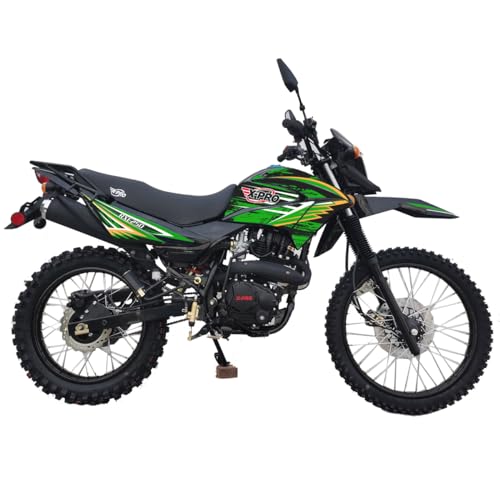
The X-PRO Cavalier 250 is the dual-sport choice in this group, built for riders who want to connect trails with public roads. It uses a 229cc counter-balanced Zongshen four-stroke engine with a five-speed manual transmission and electric and kick start, and it comes with the full road kit: headlight, tail light, turn signals, horn, mirrors, and reflectors, plus EPA approval. The counter-balanced engine should run smoother with less vibration than a non-balanced single, which matters on longer road stretches. Its stated weight capacity of 330 pounds is the highest in this group, and its 3.3-gallon fuel tank is the largest, both of which suit longer dual-sport rides. The trade-offs are a smaller 229cc displacement than the Templar models and a taller, heavier feel than the pure trail bikes. If your riding involves pavement between trails, or you want a bike you can register for road use where your state allows it, the Cavalier is the only pick here designed for that job.
X-PRO Hawk-X Enduro 250cc Motorcycle — Best Enduro-Style Pick
X-PRO Hawk-X Enduro 250cc Motorcycle — Best Enduro-Style Pick
The X-PRO Hawk-X Enduro 250cc is the newest listing in this group, first available in November 2025, and it brings an enduro-focused specification to the 250 four-stroke class. It uses a 223cc four-stroke engine with a five-speed manual transmission, CDI ignition, and disc brakes front and rear, with a claimed top speed above 70 miles per hour depending on rider weight and conditions. Its 223cc displacement is the smallest in this comparison, so it is the least powerful on paper, but the enduro styling and five-speed manual gearbox keep it in the same class. The Hawk-X suits a rider who likes the enduro look and wants the most recently listed model in the group, or someone shopping mainly on the dual-sport enduro style rather than maximum displacement. Be clear-eyed about the number: it is sold as a 250cc bike, but the engine is 223cc, a real gap from the Templar’s 249.9cc. If displacement is your top priority, choose the Templar instead.
What to Check Before You Buy
Before you order, work through this checklist so the bike that arrives matches the riding you plan to do. First, confirm the real engine displacement in the specification table, not the headline, and decide whether a 223cc or 229cc engine is acceptable to you or whether you want the full 249.9cc of the Templar models. Second, check your state rules: several of these bikes cannot be sold to California, and road registration depends on your state accepting the Manufacturer Statement of Origin, which arrives by separate mail. Third, measure your storage and transport: these are full-size bikes around 82 to 87 inches long, shipped in a large crate, and you will need a truck, trailer, or van to collect one. Fourth, plan the assembly: budget time and tools for handlebars, front wheel, brakes, mirrors, battery, and fluids, or budget for a shop to do it. Fifth, buy riding gear before the bike arrives, including a helmet, boots, gloves, and eye protection. Sixth, check the return and warranty terms on the listing, since large crated vehicles have different return rules from small accessories. Finally, re-check the listing on the day you buy: specifications, colors, and availability on these budget bike listings change often.
FAQ
Is a 250cc four-stroke dirt bike good for a beginner?
Yes, a 250 four-stroke is one of the most recommended starter sizes for an adult. It has enough torque to climb hills and carry an adult rider, but its power delivery is smooth and predictable, so it is far more forgiving than a 450cc four-stroke or a 250cc two-stroke. A new rider should still take a training course, wear full protective gear, and practice clutch control in an open area first.
What is the difference between a 250 four-stroke and a 250 two-stroke?
A 250 four-stroke makes its power with four piston strokes per cycle and runs on straight gasoline, giving smooth, tractable torque that suits trail riding. A 250 two-stroke makes more peak power for its weight but delivers it in a sharper, harder-to-manage surge, and it needs oil mixed with its fuel. For most trail riders, the four-stroke is easier to ride and easier to live with.
Are the bikes in this guide really 250cc?
Not exactly, and that is worth stating plainly. The two Templar models use a 249.9cc engine, which is effectively a true 250. The DB-K018 uses a 232.6cc engine, the Cavalier uses a 229cc engine, and the Hawk-X uses a 223cc engine. All five are sold as 250cc bikes, which is standard practice for this budget class, but the 249.9cc bikes are the strongest on paper.
Can I ride a 250 four-stroke dirt bike on the road?
Only if the bike is equipped and registered for road use in your state. The Cavalier 250 is the dual-sport pick here, with lights, signals, horn, mirrors, and EPA approval, which is the right starting point. A pure off-road bike with no road equipment cannot legally be ridden on public roads. Registration also depends on the Manufacturer Statement of Origin paperwork, which arrives by separate mail.
How much assembly does a crated dirt bike need?
Expect meaningful assembly. These bikes typically arrive about 95 percent assembled, with the handlebars, front wheel, mirrors, and battery connection left to finish, plus fluids to check and fill. Check every fastener, the chain tension, tire pressure, and brake function before the first ride. If you are not comfortable with that work, have a local shop assemble and inspect the bike.
Bottom Line
The best 250 four stroke dirt bike for most riders is the X-PRO Templar 250cc, because it offers the largest real displacement in this group at 249.9cc, a proven Zongshen four-stroke engine, a five-speed manual transmission, electric and kick start, and full-size wheels in a complete trail-ready package. If you want a sixth gear, step up to the X-PRO Templar X 250cc, which shares the same engine. If you want road legality, the X-PRO Cavalier 250 Dual Sport is the only pick built for that job. The DB-K018 and the Hawk-X cover the simpler trail and enduro ends of the class at smaller real displacements, so choose them when their price or style matters more to you than maximum engine size. Whatever you pick, check the real displacement and your state rules, and budget for gear and assembly before your first ride.
Disclosure: As an Amazon Associate, we may earn from qualifying purchases.
W
Wildshot Editorial Team
We compare specs, materials and verified owner reviews before a product earns a spot. Rankings are never paid.
Affiliate disclosure. As an Amazon Associate we earn from qualifying purchases at no extra cost to you. Prices accurate as of the date shown.
Find the best gaming desks for 3 monitors: the width, depth, weight capacity, and cable routing a triple-screen setup actually needs, plus a top pick built for three large screens.
Discover the best stationary bike workout setup: top indoor bikes, interval and endurance plans, and how to choose the right bike for home training today.
Find the best bike for bad roads today: durable hybrids with wide tires, suspension forks, and disc brakes built for potholes, gravel, and rough pavement.
Choosing a college laptop starts with GB. Compare laptops with 8GB and 16GB RAM and 256GB and 512GB SSD storage, and learn how much is enough for study.
Discover the best rechargeable OTC hearing aids for workplace conversations, with clear speech, noise reduction, battery life and Bluetooth calls for offices.
Compare the best narrow frame rollator walkers for tight doorways and small spaces, with widths, weight limits, seat sizes, wheels and folding compared.
Our eufy video doorbell s4 review 2026 covers the 3K panoramic camera, radar detection, OmniTrack AI tracking, local storage and wired setup in this guide.
Find the best bike tyre levers for road, gravel and mountain bikes. Compare plastic, steel-core and stainless sets, spoke hooks and rim-safe picks today.


 X-PRO 250cc Dirt Bike (DB-K018) — Best Straightforward Trail Bike
 X-PRO Cavalier 250 Dual Sport Enduro Dirt Bike — Best Dual-Sport Pick
 X-PRO Hawk-X Enduro 250cc Motorcycle — Best Enduro-Style Pick