Key takeaways
- One verified rangefinding binocular for hunting, explained by ranging distance, optics, angle compensation and field use, with a live-check note before ordering.
Disclosure: As an Amazon Associate, we earn from qualifying purchases.
Our top pick: Bushnell Fusion X 10×42 Rangefinding Binoculars.
A rangefinder binocular is a hunting tool with two jobs built into one housing: it magnifies the view so a hunter can find and judge game, and it measures the distance to that same animal with a built-in laser. Instead of glassing with a binocular in one hand and then reaching for a separate handheld rangefinder, the hunter ranges the animal through the same optic that is already on it. That matters in the field because the moment a hunter lowers one device and raises another is the moment a deer can step behind cover, a pronghorn can shift a few yards, or a bedded elk can stand and move on. A rangefinder binocular keeps the eyes on the animal and the distance reading in the same view, and that is the whole point of the product type.
This guide is deliberately narrow. It covers exactly one model, the Bushnell Fusion X 10×42, because it was the only rangefinding binocular with a verifiable Amazon US listing in the research pass behind this guide. Other well-known rangefinding binoculars exist, including the Vortex Fury HD 5000 and the Athlon Cronus 10×50 UHD LRF, but no ASIN for any of them could be verified in this pass, so they are not listed as products here.
The Fusion X identifier used here rests on secondary evidence rather than a captured Amazon listing copy, so a live check of the product page before ordering is mandatory: confirm that the page shows the Fusion X 10×42, model code FX1042AD, and that it can be ordered. If that check fails, do not substitute another model from memory. A live check that verifies the Vortex Fury HD 5000 would make this a solid two-product guide, and until then the honest form of this guide is a single-product guide.
Handheld laser rangefinders are not covered here. They are a different product type with a different job: a small device that ranges a target but does not serve as the primary glassing optic. This guide is about binoculars that range, not rangefinders that happen to magnify a little, and the distinction matters because the buying questions are different. A handheld rangefinder is judged mainly on ranging speed, while a rangefinding binocular must first be judged as a binocular.
Quick Picks
- Bushnell Fusion X 10×42 Rangefinding Binoculars — Best and only verified pick in this guide: a 10×42 rangefinding binocular with ranging to 1 mile, ARC angle compensation, an ActivSync display and bullet-drop compensation modes.
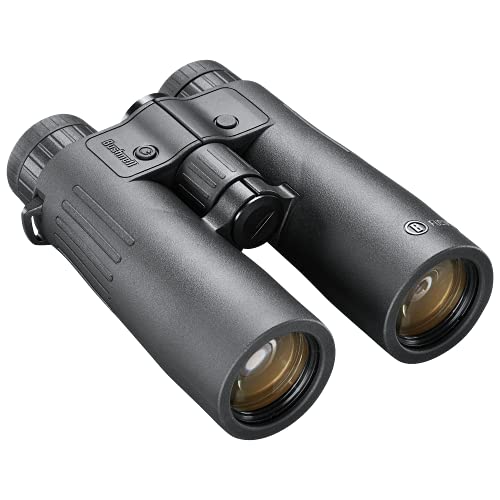
Bushnell Fusion X 10×42 Rangefinding Binoculars
OUR TOP PICK
The Bushnell Fusion X 10×42 is the only rangefinding binocular in this guide, and it earns the top pick by being the only model whose Amazon US listing could be verified in the research behind this guide. That is a statement about the evidence available, not a claim that no other good rangefinding binocular exists. It is also the reason this guide is written the way it is: a long, careful look at one instrument, rather than a shallow comparison of five models whose listings could not be checked.
Start with the optics, because a rangefinding binocular that is unpleasant to look through will be left in the truck no matter how clever its laser is. The Fusion X is a 10×42, which means ten times magnification through a 42-millimetre objective lens. Ten-power magnification is the standard choice for western hunting and open-country glassing, where the extra reach helps a hunter pick apart a distant hillside or judge an animal across a canyon. It also narrows the field of view and magnifies hand shake compared with an 8-power binocular, so it rewards a steady rest. The 42-millimetre objective is the middle ground that most hunting binoculars occupy: large enough to gather useful light at dawn and dusk, small enough that the instrument stays carryable on a long day. A hunter who glasses mostly in thick timber or at close range may find ten power more than needed, while a hunter who glasses open basins and far ridges will find it about right, and that judgement is the first one to make before looking at any ranging figure at all.
The ranging side of the Fusion X is built around a laser that ranges to 1 mile, as stated in the listing material recorded for this guide. One mile of ranging is a generous envelope for hunting, because most shots and most judgements happen far inside it, and the practical value of a long maximum range is not that a hunter will shoot at a mile. It is that a laser which can reach a mile on a reflective surface will usually still return a clean reading on a deer-sized, non-reflective target at the few hundred yards where real decisions get made.
Angle compensation is the feature that separates a hunting rangefinder from a simple distance meter, and the Fusion X carries it under the name ARC, which stands for angle range compensation. A laser measures the straight-line distance to a target, but a hunter shooting uphill or downhill needs the horizontal distance, because gravity acts on the bullet over the horizontal component of the flight, not over the slant line. On a steep slope the difference between the two can be large enough to matter, and it grows with both the angle and the distance.
The display is where the Fusion X shows its most thoughtful detail. It uses what Bushnell calls an ActivSync display, which changes between black and red depending on the light. In bright daylight a black display reads cleanly against a bright sky or a sunlit hillside, while in low light a red display stays visible without washing out the view.
Bullet-drop compensation modes round out the ranging package. These modes apply holdover information to the ranged distance so that the hunter gets a figure adjusted for the drop of the bullet over that distance, rather than a raw distance that still has to be converted in the head or on a card. Learn the modes at the range, with the rifle and load that will actually be hunted with, before trusting them in the field.
In the field, the Fusion X is used the way any binocular is used, with the ranging button as an extra step rather than a separate task. The hunter glasses a hillside or a treeline in slow sweeps, stops on anything worth a closer look, and ranges it without changing position or reaching for another device. That routine is the reason the combined instrument earns its place on a chest harness: the ranging happens inside the glassing, not after it. A hunter who glasses this way will range far more animals than one who treats ranging as a separate chore, and will learn the distances in a piece of country the way a local learns landmarks. The habit that makes the instrument pay is simple, and it costs nothing: range everything, even when the shot is not on, so that the distances to the fence post, the lone tree and the far ridge are already known when an animal appears near them.
A word on what this guide does not claim about the Fusion X. The research pass behind this guide recorded the features above and the model code FX1042AD, but it did not record a battery type, a weight figure, a weather-sealing rating, a field-of-view figure or an eye-relief figure from the listing checked. None of those figures is invented here. Before ordering, confirm the battery, accessories, dimensions and any weather-sealing claim on the live product page.
The single-product nature of this guide deserves a direct statement about its limits. With one model, there is no comparison of glass quality between brands, no side-by-side of display behaviour, and no ranking of ranging speed. What the guide can do is explain the one verified model thoroughly and set out the buying questions for any rangefinding binocular, so a reader who later finds a verified Vortex or Athlon listing can judge it against the same standard.
Specs
– Model: Bushnell Fusion X 10×42 Rangefinding Binoculars, model code FX1042AD
– Magnification and objective: 10×42
– Ranging distance: to 1 mile, as stated in the listing material recorded for this guide
– Angle compensation: ARC angle range compensation
– Display: ActivSync display, black-to-red by light
– Holdover: bullet-drop compensation modes
Pros
– One instrument does the work of a binocular and a laser rangefinder, so the eyes stay on the animal
– Ranging to 1 mile gives a generous envelope for real hunting distances
– ARC angle compensation corrects for uphill and downhill shots
– ActivSync display adapts between black and red by the light, staying readable at dawn and dusk
– Bullet-drop compensation modes give holdover-adjusted figures rather than raw distance alone
Cons
– This guide covers a single model, so there is no side-by-side comparison with other rangefinding binoculars
– The ASIN rests on secondary evidence rather than a captured Amazon listing copy, so a live check of the product page is mandatory before ordering
– No battery type, weight, weather-sealing, field-of-view or eye-relief figure was recorded from the listing checked, so those details must be confirmed on the live page
– Ten-power magnification narrows the field of view and magnifies hand shake compared with an 8-power binocular
How to Choose
Start with magnification, because it decides how the instrument feels on every glassing session. Ten power, as on the Fusion X, is the open-country choice: more reach for judging animals at distance, at the cost of a narrower view and more visible shake. Eight power is the timber and general-purpose choice: a wider view, a steadier image, and less fatigue over a long day. There is no universally right answer, only the right answer for the country a hunter actually hunts. A hunter who spends the season in thick woods and ranges inside two hundred yards will get more from eight power than from ten, while a hunter who glasses basins and far ridges will feel limited by eight. Choose the magnification for the country, and treat ranging as secondary to the glassing job.
Next, think about the objective lens and the light. A 42-millimetre objective, as on the Fusion X, is the standard compromise in a hunting binocular: it gathers enough light for the first and last half hour of legal shooting light without making the instrument heavy enough to dread carrying. Larger objectives gather more light and weigh more; smaller objectives save weight and give up low-light performance.
Then look at the ranging system itself, and ask four questions. First, how far does it range, and on what kind of target? A one-mile figure, as stated for the Fusion X, describes the ceiling of the system; the useful question is how it behaves on a deer-sized animal at the distances a hunter actually shoots, in the light a hunter actually hunts in. Second, does it compensate for angle? Any hunter who shoots uphill or downhill needs angle compensation, and ARC on the Fusion X is the feature that provides it. Third, is the display readable in the light the hunter will use it in? A display that adapts between black and red, as the ActivSync display does, is built for the dawn and dusk hours when hunting happens.
Holdover and ballistic features come next, and they deserve a cautious approach. Bullet-drop compensation modes, as on the Fusion X, can turn a ranged distance into a holdover-adjusted figure, which is genuinely useful when the hunter understands the mode selected and the load it assumes. They are not a substitute for knowing the rifle. Before hunting with any compensation mode, verify it at the range with the actual rifle and load.
Weight, carry and weather sealing decide whether the instrument gets used or gets left behind, and they should be checked on the live listing before ordering, because no figures for them were recorded for the Fusion X in the research behind this guide. A rangefinding binocular is carried on a chest harness for hours, lifted and lowered hundreds of times a day, and used in rain, snow and dust. Check the weight and the balance, check how it sits in the harness, and check what weather protection the listing actually claims rather than assuming any of it.
Finally, think about the single-model question honestly. A guide with one verified model is not a ranking, and it should not be read as one. Its value is that the one model is real, its listing was checked, and its features are described without invention. If a live check later verifies a second model, such as the Vortex Fury HD 5000, ask the same questions of it.
FAQs
Why choose a rangefinding binocular instead of a separate binocular and a handheld rangefinder?
Because the animal is ranged through the same optic that is already on it, with no device swap in between. Glassing and ranging are one continuous act: the hunter finds the animal, judges it, presses the ranging button, and reads the distance without lowering the binocular or raising a second device. That matters because the seconds spent swapping devices are often the seconds in which an animal moves, turns, or steps behind cover. A hunter who already owns a good binocular may reasonably prefer a separate handheld rangefinder, but for a hunter buying fresh, the combined instrument removes a step from the most time-sensitive moment in the hunt. The Fusion X is a rangefinding binocular in exactly this sense, and this guide does not cover handheld rangefinders because they answer a different buying question.
What does ARC angle compensation actually do?
It corrects the ranged distance for the angle of the shot, so the hunter gets a figure that reflects the horizontal distance gravity acts over, rather than the longer slant-line distance the laser measures. On flat ground the two are the same and the correction does nothing. On a steep uphill or downhill shot they differ, and the difference grows with both the angle and the distance, which is why angle compensation matters most to mountain hunters and least to flat-country hunters. The Fusion X carries ARC for this purpose, and the practical advice is to learn what the corrected figure means for the hunter’s own rifle and load at the range before trusting it on an animal.
Should I buy the Fusion X now, or wait until a second verified model appears?
That depends on what the live check shows and on how soon the instrument is needed. First, check the live product page and confirm that it shows the Fusion X 10×42, model code FX1042AD, and that it can be ordered. If that check fails, do not order it and do not substitute another model from memory, because the ASIN used here rests on secondary evidence. If the check passes and the season is near, the Fusion X is complete on its own terms, and waiting buys a comparison rather than a better hunt. A live check that verifies the Vortex Fury HD 5000 would make this a two-product guide and would give a genuine choice, so a hunter with time to spare and an interest in comparing may reasonably wait. Either way, the decision should rest on the live listing, not on this guide alone, and the live check is the step that should not be skipped.
Conclusion
The Bushnell Fusion X 10×42 is the only rangefinding binocular in this guide, and it is here because its Amazon US listing could be verified, not because it is the only rangefinding binocular worth owning. It combines a 10×42 binocular with a laser that ranges to 1 mile, ARC angle compensation for uphill and downhill shots, an ActivSync display that changes between black and red by the light, and bullet-drop compensation modes for holdover-adjusted figures. Those are the features a hunting rangefinder binocular needs, and they are the features to judge any other model by when a live check verifies one. Before ordering, confirm on the live product page that it shows the Fusion X 10×42, model code FX1042AD, and that it can be ordered, and confirm the battery, accessories, dimensions and weather protection that this guide did not record. For a hunter who wants one instrument that glasses and ranges without a device swap, the Fusion X is the verified pick in this guide, and the live check is the final step before it becomes the pick in the field.