We independently review everything we recommend. When you buy through our links, we may earn a commission. As an Amazon Associate we earn from qualifying purchases.
4 Best Gardening Gloves to Protect From Thorns (Nov 2026)
Four thorn proof gardening gloves compared on hide, gauntlet length and palm reinforcement, for pruning roses, clearing blackberries and handling cactus.
Four thorn proof gardening gloves compared on hide, gauntlet length and palm reinforcement, for pruning roses, clearing blackberries and handling cactus.
The real decision with thorn gloves is how much of your arm you are willing to leave exposed. A rose cane does not stop at the wrist, and neither do blackberry whips, holly tips or cactus spines, so a short glove that feels fine for weeding can leave your forearms scratched raw after ten minutes inside a shrub. Buyers also have to weigh hide type, because thick cowhide, flexible goatskin and breathable pigskin each trade protection against feel in a different way.
This roundup is for rose growers, bramble clearers and anyone who prunes cactus, holly or pyracantha at home. Every pick is a glove whose own Amazon listing is built around thorn protection, with a gauntlet or long cuff rather than a plain work glove shape. The four pairs were chosen from the materials, cuff lengths, palm reinforcement and sizes printed on their Amazon product pages, so the differences below come from listing facts, not marketing claims.
Quick Picks
As an Amazon Associate we earn from qualifying purchases
Product
Best for
Key spec from title
SLARMOR Long Gardening Gloves
Clearing blackberry canes and dense brush
100 percent cowhide with elbow-length gauntlet
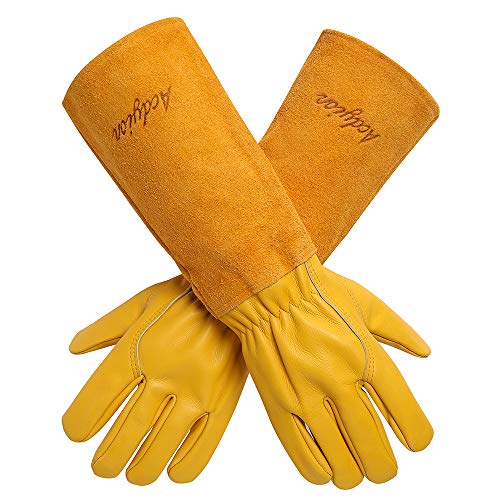
Acdyion Thorn Proof Gardening Gloves
Reaching deep into rose beds and cactus
Cowhide with double-reinforced palms
Legacy Gardens Leather Gardening Gloves
Fine pruning that still needs forearm cover
Goatskin hand with cowhide cuff
HANDLANDY Rose Pruning Gloves
Long pruning sessions in warm weather
Pigskin gauntlet with 14-inch sleeve
How to Choose
Match the hide to the thorn
Cowhide is the thickest of the three hides used here and shrugs off abrasion from woody canes, which suits blackberry and bramble work. Goatskin has a tighter grain and stays flexible, so your fingers keep their feel on pruners while the surface still turns most rose thorns. Pigskin is porous and breathes better in heat, and it stays soft after getting damp, though it is usually thinner than cowhide. Read the listing’s palm material line first, because the palm and fingertips take nearly every puncture.
Cuff length decides forearm safety
A gauntlet that ends just past the wrist leaves a band of bare skin exactly where canes spring back. Listings here run from forearm-length cuffs to sleeves that reach the elbow, and that difference matters more than small changes in leather thickness. Check the stated sleeve or total glove length against your own arm, and look for a cuff wide enough to fit over a shirt sleeve. If you reach overhead into climbers, the longest cuff you can tolerate is usually the right call.
Reinforcement belongs on palms and fingertips
Thorns rarely defeat a glove through the back of the hand. They push through the palm when you grab a cane and slide along the fingertips when you pinch a stem, so double layers, padding or extra stitching in those two zones matter more than a thick cuff alone. Product pages state this in different ways, from double-reinforced palms to reinforced padding on the thumb and first fingers. If a listing is silent about palm reinforcement, treat the glove as a lighter-duty option.
Size the glove before the plant wins
Leather gloves that run large bunch at the fingers, and bunched leather is where a thorn finds a fold to push through. Most listings here sell one size per page, so the size in the title is the size you are actually buying. Measure around your knuckles, compare it with the size chart on the product page when one is printed, and remember that cowhide softens and shapes to the hand with use while synthetic cuffs keep their original fit.
The SLARMOR gauntlet is the heaviest armor in this group, built from cowhide through both the hand and the long cuff. That one-material build suits gardeners who drag blackberry canes, cut back holly or clear overgrown shrubs, where a thinner glove would spend the day catching on woody stems. The gunn cut and keystone thumb named on the listing keep the grip closer to a natural hand position than a stiff mitt shape, and the padded fingertips add a second line of defense where canes are grabbed.
Acdyion builds its gauntlet from thick cowhide as well, but the detail that stands out on the listing is the double reinforcement across the palms and fingertips, the two places a rose thorn usually wins. The sleeve runs to the elbow, so reaching into the middle of a mature shrub keeps skin covered the whole way. The listing prints a full size chart with sleeve and total lengths, which makes it easier to match the glove to a smaller or larger hand before ordering.
Legacy Gardens mixes two hides on one glove: an A-grade goatskin hand for feel, and a cowhide gauntlet cuff for the forearm. That split suits pruning work where your fingers still need to judge a stem before cutting it, while the arm stays behind thicker leather. The listing adds reinforced padding with double stitching across the thumb, index and middle fingers, which are the digits that hold canes steady against the pruners and take the most punishment over a season.
HANDLANDY takes the breathable route, with a pigskin hand and a long pigskin gauntlet the listing measures at a 14-inch sleeve. Pigskin’s open grain lets more air move than cowhide, which matters on warm afternoons when a heavy gauntlet gets taken off and left on the bench. Reinforced padding backs up the palm, and the listing ties its puncture claim to the ASTM F2878 standard. The trade is thickness: this is the lightest hide in the group, chosen for comfort across long, steady pruning sessions.
Specs
Material: 100 percent natural pigskin leather per listing
Sleeve: 14-inch gauntlet coverage per listing
Dimensions: 16.54 x 3.94 x 0.39 in; weight 6.4 oz
Model: HANDLANDY 1601
Reinforcement: reinforced padding on the palm
Size on this listing: Medium, beige white
Best for: Long rose pruning sessions in warm weather.
Watch out for: Pigskin is thinner than the cowhide pairs here, so for the heaviest blackberry clearing a cowhide gauntlet is the safer pick.
ASIN: B0DX2C4BFJ
Which One Fits Your Situation
You are clearing a blackberry thicket
Coverage and hide thickness matter more than finger feel here, because canes whip back at forearm height. The SLARMOR gauntlet is the match: cowhide from fingertips to elbow, with padded fingertips for grabbing canes. The Acdyion pair is the close alternative if its size chart fits your hand better, since it adds double reinforcement on the palm where canes are pulled through.
You prune roses every week
Weekly pruning rewards feel and breathability over maximum armor. The Legacy Gardens glove keeps a goatskin hand for judging stems, while its cowhide cuff still guards the forearm. On hot days the HANDLANDY pigskin gauntlet breathes better and stays on your hands longer, which is its own kind of protection, as long as your roses are maintained shrubs rather than wild thickets.
You work around cactus and agave
Spines punish the palm and fingertips first, so reinforcement placement decides this pick. The Acdyion glove doubles its leather across palms and fingertips and covers the arm to the elbow for reaching between pads. Work slowly even in thick cowhide, because a cactus spine driven straight on can still find a seam, and no listing here promises protection against a direct, full-weight push.
Your hands are small or hard to fit
Gauntlets fail small hands when the cuff fits but the fingers swim. Start with the Acdyion listing, which prints sleeve and total lengths by size, and compare its chart with your knuckle measurement. The Legacy Gardens pair is the other route worth checking, since its goatskin hand follows the fingers more closely than a stiff cowhide shell of the same marked size.
Common Mistakes
Buying a short work glove for rose pruning and leaving the forearm bare, which is where most scratches actually land.
Judging protection by cuff thickness alone while the palm and fingertips carry no reinforcement at all.
Ordering the marked size without checking the size chart on the listing, then fighting bunched leather at the fingers.
Grabbing canes at full speed; even thick cowhide can be beaten by a spine pushed straight through a seam.
Storing leather gloves wet or next to a heat source, which stiffens the hide and opens cracks that thorns can exploit.
Frequently Asked Questions
Can a thorn get through a leather gauntlet glove?
Yes, in the wrong spot. A spine pushed straight into a seam or a worn fingertip can still get through, which is why the listings here stress reinforced palms and fingertips. Thick cowhide slows most rose and blackberry thorns, but technique matters too: grip canes from the side, cut before you pull, and retire a pair once the palm leather thins or cracks.
Which hide is best for rose pruning, cowhide, goatskin or pigskin?
It depends on the balance you need. Cowhide gives the thickest barrier for wild roses and brambles. Goatskin keeps more finger feel, which suits careful pruning of maintained bushes. Pigskin breathes best and stays soft after damp work, but it is the thinnest of the three. Many gardeners end up matching the glove to the plant rather than owning one pair for everything.
How long should the cuff of a thorn glove be?
Long enough that no skin shows between glove and sleeve when your arm is fully stretched into the plant. For most adults that means a gauntlet reaching at least the mid-forearm, and elbow-length sleeves, like the longest listings here, suit overhead climbers and deep shrubs. Measure your forearm and compare it with the sleeve length printed on the product page before ordering.
How do I keep leather thorn gloves from stiffening?
Shake off soil after each session and let the gloves dry at room temperature, away from radiators and direct sun, since heat makes leather brittle. Brush dried mud off instead of soaking the pair, and work in a leather conditioner when the surface starts to look pale or dry. Store them flat or hanging by the cuff so the gauntlet keeps its shape.
W
Wildshot Editorial Team
We compare specs, materials and verified owner reviews before a product earns a spot. Rankings are never paid.
Affiliate disclosure. As an Amazon Associate we earn from qualifying purchases at no extra cost to you. Prices accurate as of the date shown.
Looking for the best vegan mattresses? Compare four Amazon-listed, wool-free mattresses by materials, firmness, thickness, trial, and warranty before you buy.
Find the best lightweight soft and absorbent bath towels for daily showers. Compare plush Turkish cotton sets that dry fast and stay soft wash after wash.
Searching for the best inexpensive garbage disposals? Compare five budget continuous-feed models on power, size, mounting, noise, and warranty before you buy.
Searching for the best blankets for Florida? Compare lightweight, breathable bamboo, cotton, and cooling blankets made for warm, humid nights all year round.
Find the best window fans for homes with reversible airflow, thermostats, and quiet twin-blade designs that cool bedrooms and living rooms well every day.
Discover the best floor keyboard rugs for classrooms, playrooms, and home offices, with expert tips on size, material, durability, and keyboard designs.
Discover the best butts humping pillows for laughs and cozy lounging, with soft novelty designs, sizes, covers, and tips for choosing a fun gag gift today.
Searching for the best alarm clocks Plutech fans ask about? Compare Plumeet and similar bedside clocks with dimmers, loud alarms, snooze, and USB charging.