We independently review everything we recommend. When you buy through our links, we may earn a commission. As an Amazon Associate we earn from qualifying purchases.
Best Hillside Mowers: Slope-Rated Picks for Steep Lawns
Compare the best hillside mowers by their listing-stated slope ratings, drive type and cutting width, from AWD robot mowers to remote-control track machines and a rear-wheel-drive walk-behind.
Compare the best hillside mowers by their listing-stated slope ratings, drive type and cutting width, from AWD robot mowers to remote-control track machines and a rear-wheel-drive walk-behind.
A hillside changes every part of mowing. A mower that feels easy on flat ground can slip, spin its wheels, or pull you off balance once the lawn tilts, and a machine that is safe to walk behind on a gentle rise may be the wrong tool entirely for a steep bank. That is why the best hill side mowers are not simply the most powerful mowers you can buy. They are the ones whose drive system, traction, and stated slope capability match the actual gradient in your yard.
This guide compares four hillside mowers sold on Amazon US, each included because its listing describes a feature that matters on a slope. Two are autonomous or remote-controlled machines with explicit slope ratings stated in percent or degrees in their listings. One is a tracked remote-control mower built for ground that is too steep to walk on. The fourth is a conventional rear-wheel-drive walk-behind, included for moderate hills where you can still walk safely and where rear-wheel traction is the relevant listing feature. No slope figure is guessed here: where a number appears, it is the figure stated in that product’s listing, and where a listing states no maximum gradient, this guide says so instead of inventing one.
As an Amazon Associate, we earn from qualifying purchases made through links on this page.
Quick Picks
Best autonomous pick for steep lawns: Mammotion LUBA 2 AWD 3000X — all-wheel drive with a listing-stated slope rating of 80% and coverage stated for up to 0.75 acre.
Best remote-control wheeled pick: Mowrator S1 4WD 18Ah — four-wheel drive, remote operation, and a listing-stated slope rating of 75% (37 degrees), with a 21-inch blade.
Best for banks too steep to walk: DareDevil Mower Remote Control Lawn Mower — a tracked, gas-powered remote-control machine whose listing states a 55-degree slope climb and a 24-inch cut.
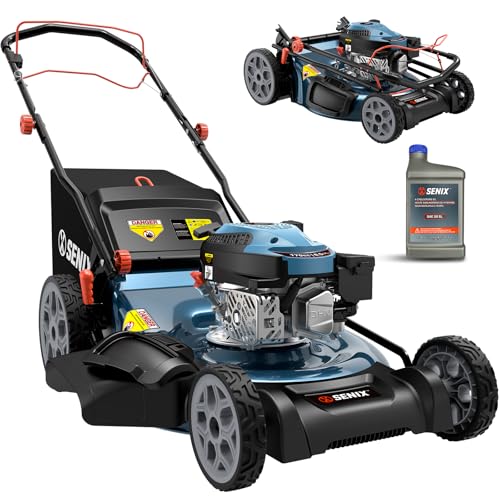
Best walk-behind for moderate hills: SENIX 22-Inch 170cc Self-Propelled Mower — rear-wheel drive, 11-inch rear wheels, and a 22-inch deck for yards where walking the slope is still safe and sensible.
How Slope Ratings Work in This Guide
Manufacturers do not all state slope capability the same way. Some listings give a percentage grade, some give degrees, and some give both. A percentage grade describes rise over run, so an 80% grade is steeper than a 75% grade, and neither figure should be read as degrees. Other listings state degrees directly, as the DareDevil listing does with its 55-degree climb. Because the formats differ, the safest approach is to compare each machine against the steepest section of your own lawn using the same format the listing uses, and to leave a margin rather than planning to mow exactly at the stated limit. Wet grass, loose soil, and turns on the slope all reduce the grip available in real use, whatever the headline figure says.
1. Mammotion LUBA 2 AWD 3000X — Best Autonomous Pick for Steep Lawns
Top Pick
1. Mammotion LUBA 2 AWD 3000X — Best Autonomous Pick for Steep Lawns
Drive: all-wheel drive, four-wheel motor stated at 165W
Stated slope rating: 80%
Stated coverage: up to 0.75 acre
Navigation: RTK and vision, as described in the listing
The Mammotion LUBA 2 AWD 3000X is a robotic lawn mower built around all-wheel drive, which is the key reason it belongs in a hillside guide. On a slope, a two-wheel-drive robot can lose traction on the undriven wheels and slide or stall. Driving all four wheels spreads the climbing effort across the whole machine. Its listing states a slope rating of 80% and coverage for up to 0.75 acre, and it describes a 165W four-wheel motor providing the driving capability behind that climbing figure.
Because it works autonomously, the LUBA 2 AWD 3000X also removes the person from the slope altogether. Nobody has to walk the bank, hold a mower back on the way down, or manage footing on wet grass. For a homeowner whose main lawn is sloped but still a defined, mowable area, that combination of all-wheel drive and hands-off operation is the central appeal. The listing also references RTK and vision-based navigation and a 4G-equipped version, which suits lawns laid out in more than one zone.
The Mowrator S1 4WD takes a different approach: it is a remote-control mower, so an operator drives it rather than programming it and leaving it alone. Its listing describes a 56V 18Ah machine with four-wheel drive, a 21-inch real blade, a cutting height range of 1.5 to 4.3 inches, and a stated slope capability of 75%, given in the listing as 37 degrees. Coverage is stated at up to 1.12 acres for this configuration.
Remote control matters on a hillside because it lets you stand on safer ground while the machine works the slope. Four-wheel drive matters because, as with the robot above, every wheel pulls, which helps the mower keep moving up a grade instead of spinning a single driven axle. The wider cutting height range also helps on uneven hillside grass, where scalping on bumps and missed tufts in dips are common problems. If your slope is irregular, broken up by features, or awkwardly shaped for an autonomous mower to map, a machine you drive directly can be the more practical format.
The DareDevil Mower is the heavy-duty option in this guide, and its listing is explicit about why: it states a 55-degree slope climb, a 24-inch cut, a 9hp gas engine, a 6L fuel tank, and a track drive system with dual 700W track motors. Tracks change the hillside equation because they spread the machine’s weight over a longer contact patch than wheels, which helps stability and grip on steep, soft, or uneven ground. Its low, tracked format is aimed at ditches, embankments, pond edges, and slopes that are dangerous or impractical to walk.
The listing describes remote-controlled operation at up to 200 metres, covering starting, stopping, and steering from a distance. That distance is the safety story here: on a bank steep enough that footing itself is the risk, the operator does not need to be beside or behind the machine at all. The gas engine and larger tank also point this mower at longer sessions on larger or rougher areas, rather than short cuts on a tidy suburban lawn. The listing also mentions a snowplow function, underlining that this is a year-round land-management machine rather than a simple lawn mower.
Not every hillside needs a robot or a remote-control machine. If your slope is moderate, walkable, and part of a normal residential lawn, a self-propelled walk-behind with the right drive layout can be the sensible choice. The SENIX mower in this guide uses rear-wheel drive, and that detail is why it is here. When a mower climbs, weight shifts toward the rear, and a rear bag fills over the rear wheels as you work. Driving the rear wheels puts the powered wheels where the weight is, which is the listing feature that helps traction on a grade.
Its listing describes a 170cc 4-cycle OHV engine, a 22-inch deck, single-speed rear-wheel self-propulsion, 8-inch front wheels and larger 11-inch rear wheels, and a cutting height range of 1.25 to 4 inches across six positions with a single lever. The larger rear wheels help the mower roll over uneven ground at the top and bottom of a slope, where transitions are often roughest. Important honesty note: this listing does not state a maximum slope in percent or degrees, so this mower is included for moderate, safely walkable hills based on its drive layout and wheel sizes, not for a rated gradient. If your bank is steep enough that you are asking what degree it is, choose one of the rated machines above instead.
Start with the slope itself. Measure or honestly assess your steepest section, not the average lawn. Then compare it with the figure in each listing, in the same format the listing uses, and keep a safety margin. A machine working near its stated limit on dry grass has no margin left on wet grass.
Decide who, if anyone, walks the hill. If the slope is safe to walk, a rear-wheel-drive walk-behind can be enough. If walking it is tiring but the ground is defined and regular, an autonomous all-wheel-drive robot removes the effort. If the bank is too steep or rough to walk safely, remote control is the format designed for that job, with tracks offering the most grip on the roughest ground.
Match drive type to traction. Rear-wheel drive is the minimum sensible layout for a walk-behind on a hill. All-wheel and four-wheel drive improve climbing traction further. Tracks spread weight and grip over more ground, which suits soft, steep, or broken terrain.
Check cutting width against the area. A 24-inch tracked machine covers rough acreage quickly, while a 21-inch remote mower or a robot suits defined residential lawns. Wider is not automatically better on a slope: narrower machines are easier to turn and place on awkward, terraced, or obstacle-filled banks.
Be careful with unrated claims. If a listing states no slope figure, treat the mower as a moderate-hill machine at most. Do not transfer a rating from a different model, a different configuration, or a review headline onto the exact product you are buying. Check the exact listing for the exact configuration, including battery size on remote mowers, because slope and coverage figures can be tied to a specific version.
Plan for wet-weather limits. Every rating in this guide comes from a listing describing the machine’s capability, not a promise about your lawn after rain. On any slope, mowing when the grass is dry, working across the slope with a walk-behind rather than straight up and down, and keeping people and pets clear of a remote or robotic machine’s path are basic habits that matter as much as the machine itself.
Frequently Asked Questions
What does an 80% slope rating mean?
It is a percentage grade: the amount of rise compared with horizontal distance, as stated in the product listing. It is not the same as 80 degrees. The Mammotion listing in this guide states 80%, while the Mowrator listing states 75% and also gives that figure as 37 degrees, which shows how different the two scales are.
Are riding mowers a good choice for hillsides?
This guide does not include riding mowers, because the hillside problem it addresses is traction and operator safety on steeper ground. The picks here keep the operator off the machine and, for the remote and robotic models, off the slope itself. For gentle, rolling ground a rider may be a separate conversation, but it is not the tool this guide recommends for steep banks.
Why does rear-wheel drive matter on a walk-behind mower?
When a mower climbs, its weight shifts rearward, and a filling grass bag adds more weight over the rear wheels. Driving those wheels means the powered wheels carry the most load, which helps them grip. That is the reason the SENIX pick in this guide is a rear-wheel-drive model rather than a front-wheel-drive one.
Can a robot mower really handle a steep lawn?
Only within the figure its listing states. The all-wheel-drive robot in this guide carries a listing-stated rating of 80%, which is why it is included. A robot with no stated slope rating, or a lower one, should not be assumed to handle the same ground. Always compare the listing figure for the exact model with your steepest section.
When should I choose a tracked remote mower instead?
When the ground is too steep, soft, or rough to walk safely, or when the area is an embankment, ditch, or pond edge rather than a lawn. The tracked DareDevil in this guide states a 55-degree climb and is built for that kind of land management, at the cost of being far more machine than a normal yard needs.
Should I mow a hillside when the grass is wet?
Avoid it where you can. Wet grass reduces grip for wheels, tracks, and your own footwear at the same time, and it eats into whatever margin exists between your slope and the machine’s stated rating. Waiting for the slope to dry is the simplest safety upgrade available.
Conclusion
The best hill side mowers solve three different versions of the same problem. For a defined, sloped residential lawn, the Mammotion LUBA 2 AWD 3000X pairs all-wheel drive with a listing-stated 80% slope rating and removes the operator from the hill entirely. For irregular slopes you want to drive yourself from safer ground, the Mowrator S1 4WD 18Ah states 75% (37 degrees) with four-wheel drive and a useful cutting height range. For banks too steep to walk, the tracked DareDevil states a 55-degree climb and a wide 24-inch cut. And for moderate, walkable hills, the rear-wheel-drive SENIX covers ground efficiently, with the clear caveat that its listing states no maximum gradient. Measure your slope first, read the exact listing figure for the exact configuration, and choose the machine whose stated capability leaves you a real margin.
A
admin
We compare specs, materials and verified owner reviews before a product earns a spot. Rankings are never paid.
Affiliate disclosure. As an Amazon Associate we earn from qualifying purchases at no extra cost to you. Prices accurate as of the date shown.
Compare pool cleaners by the pool size each maker states in feet: corded robots for pools up to 33 and 50 ft, plus cordless picks for 1,600 sq ft and 65 ft.
Compare the best deep seat outdoor cushions by size, fabric and fill, from Sunbrella acrylic sets to olefin designs sized for standard deep seat chair frames.
Compare five garden hose sprinklers for lawns, from oscillating and gear-drive models to a brass impact head, and pick the pattern that fits your yard.
Learn the best time to turn on sprinklers, why early morning beats midday and evening, and how wind, pressure and season shift the ideal watering window.
Discover the best oil dispensing sprayers for air fryers, salads, grilling and everyday cooking — even misting, portion control and refillable bottles.


 4. SENIX 22-Inch 170cc Self-Propelled Mower — Best Walk-Behind for Moderate Hills