We independently review everything we recommend. When you buy through our links, we may earn a commission. As an Amazon Associate we earn from qualifying purchases.
5 Best Exhaust Pipe Cutters for Converters (November 2026)
Cut converter pipe cleanly with the right chain cutter. Compare five exhaust pipe cutters by diameter range, blade count, grip and working clearance.
Cut converter pipe cleanly with the right chain cutter. Compare five exhaust pipe cutters by diameter range, blade count, grip and working clearance.
Removing a catalytic converter comes down to two clean cuts in pipe that sits inches from a floorpan, a heat shield and often a fuel line. A reciprocating saw wants swing room you do not have and throws sparks, while a chain cutter wraps the tube and severs it with a rocking motion. The real decision is matching the cutter’s stated diameter range and chain style to the pipe in front of you, because a tool that cannot close around the tube turns a simple swap into an hour of fighting rusted metal.
This roundup is for driveway mechanics replacing a failed converter, small-shop technicians who cut exhaust pipe every week, and truck owners whose tubing is too large for standard cutters. Every pick below was chosen from its Amazon listing name and stated specifications: diameter range, blade or wheel count, chain design, handle type and included parts. Where a listing leaves a gap, such as wall-thickness limits, it is flagged rather than filled in.
Quick Picks
As an Amazon Associate we earn from qualifying purchases
Product
Best for
Key spec from title
OEMTOOLS 27045 Exhaust Cutter
Tight underbody spaces
Cuts 3/4 to 3-1/4 inch pipe
Performance Tool W80689 Tail Pipe Cutter
The widest diameter span
3/4 to 3-3/4 inch, 15 blades
QWORK Exhaust Cutter DG37834
Simple four-step manual cutting
3/4 to 3-1/4 inch, cushion grip
Powerbuilt 940538 Tail Pipe Cutter
Oversized truck and diesel pipe
Covers 3-1/2 to 6 inch pipe
DTREELS Chain Exhaust Cutter
Small tubing cut in place
15 wheels, max 1.69 inch pipe
How to Choose
Measure the pipe before you trust the range
Every cutter in this category states a diameter window, and the cut only goes well when your pipe sits comfortably inside it. Measure the outside diameter of the tube exactly where the cut will land, not at the muffler and not from a forum post about a similar car. Converter inlet and outlet pipes can differ in size on the same vehicle, so check both ends before ordering. Leave margin at both ends of the stated range: a chain that barely closes around the pipe has no links left to tighten as the wheels bite deeper, and an oversized tool on small pipe wanders off the cut line.
Swing room decides which cutter style works
A chain cutter still needs space to move. Most designs in this group work by rocking the handle back and forth, and some listings promise a complete cut with only a quarter turn of travel. That matters when the pipe runs tight against a floorpan or a frame rail and a full rotation is impossible. Before choosing, picture the tool wrapped around your pipe with the vehicle at working height: the chain needs clearance all the way around the tube, and the handle needs an unobstructed arc. If neither exists, the pipe section may have to come off the vehicle and be cut on a bench instead.
Blade count and wheel care decide cut quality
Chain cutters sever pipe with a row of small cutting wheels, and the listings here run from twelve teeth to fifteen blades or wheels. More cutting points spread the pressure around the tube, which helps the chain track straight on rusty, slightly oval pipe. The wheels do the work, so their condition decides the result: listings for these tools direct you to keep the wheels oiled, and a small amount of cutting oil before the first pass is a recurring instruction. Dry, grit-packed wheels skate across the surface instead of biting, which crushes thin-wall tubing rather than cutting it.
Grip and leverage matter more than tool size
Cutting through exhaust tubing is a squeezing and rocking job that can take several minutes per cut, so handle design shapes the whole experience. Cushion grips appear across these listings because bare metal handles dig into the palm under load. One-handed operation is worth having when the other hand is steadying the pipe or holding a light. Locking and plier-style jaws hold chain tension for you, while plain wrap-and-hook designs rely on your grip throughout. Longer handles add leverage on large pipe, yet that same length becomes a liability in a cramped transmission tunnel, so match handle style to your workspace.
The OEMTOOLS 27045 suits the converter job that happens in a driveway, with the car on stands and very little room to swing anything. Its chain wraps the pipe and hooks onto the plier jaw, so the cut happens through a one-handed rocking motion instead of a saw stroke. Cushion grips keep the tool planted while you work through rusted tubing, and the listing covers use both on the vehicle and off it once a section is removed. The stated range spans the pipe sizes found on most cars and light trucks, which makes this cutter the sensible default for a first converter replacement.
The Performance Tool W80689 is the pick when one cutter has to cover several vehicles, because its stated range runs wider than the rest of this group. Fifteen hardened steel blades do the cutting, and the listing says the tool needs only a quarter turn to work, which suits mid-pipe cuts where a floorpan or crossmember blocks a longer swing. A cushion-grip handle supports one-handed rotation while the other hand keeps the chain seated on the cut line. Buyers maintaining a small fleet, or a household with both a compact car and a larger SUV, get the most from that extra capacity.
The QWORK DG37834 keeps the design as plain as it gets: wrap the chain around the pipe, hook it, close the handles and rotate. That four-step sequence is easy to learn on a first exhaust job, and the cushion-grip handles take the edge off the repeated squeezing a rusty converter pipe demands. The listing also names PVC and copper among its materials, so the same tool can serve plumbing repairs around the house between automotive jobs. For an occasional user who wants a dedicated chain cutter without a complicated jaw mechanism, this is the straightforward option in the lineup.
The Powerbuilt 940538 exists for the pipes the other four cutters cannot touch. Its range starts where standard chain cutters end and runs up to six inches, which covers the large-diameter exhaust tubing fitted to diesel pickups and heavy-duty trucks. Twelve cutting teeth produce the cut, and the long handle supplies the leverage that big, thick tubing demands. This is a specialty tool rather than a general one: it will not close down on ordinary car pipe, so it belongs in the toolbox of someone who regularly works on trucks, not in a kit built for a single compact car.
The DTREELS cutter is the small end of this category: a carbon-steel chain tool built to cut tubing in place without removing the whole exhaust section. Fifteen rotating steel wheels ride on a 27.2-centimeter wrapping chain, and the listing describes the tool for thin-wall steel, copper and aluminum tubing. That makes it a fit for small-diameter pipe runs, auxiliary lines and compact engine bays where a full-size cutter body will not fit around the tube. Its ceiling is low, though, so it complements a standard cutter rather than replacing one for converter work on most cars.
Which One Fits Your Situation
A converter swap on a car you drive every day
Pick the OEMTOOLS 27045. Its 3/4 to 3-1/4 inch range covers the pipe on most passenger cars, the one-handed rocking action works in the space a driveway and jack stands give you, and the limited lifetime warranty suits a tool that may sit in a drawer between jobs. The QWORK DG37834 is the alternative if you prefer the simplest possible wrap-and-hook operation.
The pipe has to be cut while it is still on the vehicle
Start with the OEMTOOLS 27045 for standard pipe sizes, since its listing covers on-vehicle cutting and its compact body needs little swing room. For genuinely small tubing tucked against other components, the DTREELS cutter is the one designed around in-place work, provided the pipe measures under its 1.69 inch ceiling.
A diesel truck with oversized exhaust tubing
Go straight to the Powerbuilt 940538. Nothing else in this roundup reaches six-inch pipe, and its twelve teeth and long handle are built for thick truck tubing. If your truck’s pipe tops out below that range, the Performance Tool W80689 covers up to 3-3/4 inches with a shorter, easier swing.
A run of cuts across a weekend of exhaust work
Choose the Performance Tool W80689. Fifteen hardened steel blades share the work across repeated cuts, the quarter-turn action reduces fatigue when you are cutting several sections in a row, and the wide range means one tool follows you from the tailpipe to the converter on different vehicles in the same session.
Common Mistakes
Guessing the pipe size from the muffler or the car’s model name instead of measuring the outside diameter at the exact cut point.
Forcing a cutter past its stated maximum diameter, which bends chain links and leaves a slanted, hard-to-seal cut.
Cutting with dry, grit-packed wheels, so the chain skates across the surface and ovals thin-wall pipe instead of severing it.
Placing the cut too close to the converter body, leaving no straight section of pipe for the replacement clamp or weld.
Skipping the local emissions rules that govern converter removal and replacement in your area.
Frequently Asked Questions
Can a chain exhaust cutter remove a catalytic converter?
Yes, by cutting the pipe on both sides of the converter. The chain wraps the tube next to the converter body and severs it without sparks or a saw blade, which is why this tool style is used for converter replacement. The replacement converter still has to meet the emissions rules where the vehicle is registered.
What size exhaust pipe cutter do I need for a converter swap?
Measure the outside diameter of the pipe at both cut points, then choose a cutter whose stated range contains both numbers with room to spare. Most car and light-truck converter pipes fall inside the 3/4 to 3-1/4 inch window covered by standard chain cutters, while large diesel tubing needs a high-capacity model.
Do chain exhaust cutters work on stainless steel pipe?
It depends on the individual listing rather than the tool style. Some listings name their materials directly, such as thin-wall steel, copper and aluminum, while others describe broader exhaust use without the same detail. Check the stated materials and wall limits for the exact cutter, and expect hard stainless tubing to wear cutting wheels faster than mild steel.
How do I keep the cut square with a chain cutter?
Mark the cut line all the way around the pipe first, then seat the chain directly on that line before tightening. Work in small increments: rock the tool, snug the chain slightly, and rock again, keeping the wheels in the same groove. Rushing with a loose chain lets the tool spiral and leaves an angled edge.
W
Wildshot Editorial Team
We compare specs, materials and verified owner reviews before a product earns a spot. Rankings are never paid.
Affiliate disclosure. As an Amazon Associate we earn from qualifying purchases at no extra cost to you. Prices accurate as of the date shown.
Best exhausts for four wheelers compared by fitment years, build and service design, with slip-ons and full systems for the Raptor 700 from each listing.
Find the best wedding favors for men with practical bottle opener picks in wood, vintage key and wallet card styles that suit rustic and modern weddings.
Compare five beginner alto saxophones with verified Amazon listings, from complete starter kits to a professionally set up student horn, and choose well.
Five beginner embroidery hoops compared on size range, wood type, and screw quality, from bulk bamboo sets to a premium beech hoop and a metal display frame.
SAVIOR HEAT heated throw pillow guide: lumbar support cushion with a 10000mAh battery, 3 heat levels and 3-second warm-up for office, car and home use.


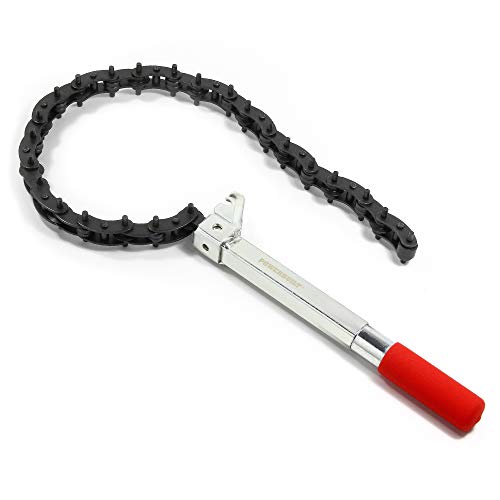 Powerbuilt 940538 Tail Pipe Cutter
 DTREELS Chain Exhaust Cutter