Key takeaways
- The second guide in this series on beach riding: cruiser bikes with wide tyres, low step-through frames, and corrosion-aware care for sand, boardwalk, and packed beach paths.
Affiliate Disclosure: As an Amazon Associate, we earn from qualifying purchases made through links in this article, at no additional cost to you. Availability and specifications change over time, so confirm the size, wheel size, and current availability on the product page before you buy.


About This Second Beach Guide
This is the second guide in this series on riding a bike at the beach, and it covers different ground from the first. The first guide introduced beach riding in general; this guide focuses on the practical question that decides whether a beach ride is enjoyable or exhausting, which is how a bike behaves on sand, on the boardwalk, and on the packed paths that run beside the shore. The three bikes below are all cruisers with wide tyres and upright riding positions, chosen because wide tyres float over soft surfaces instead of cutting into them, and because an upright position keeps the rider comfortable on slow, scenic rides. One pick suits shorter riders, one suits taller riders, and one sits in the middle, so the guide covers the height range rather than repeating a single size.
A note on what beach riding really involves: most beach riding is not riding on deep, dry sand. Deep dry sand defeats almost any ordinary bike, including the ones in this guide. Real beach riding means the firm, damp sand near the waterline at low tide, the packed sand paths above the beach, and the boardwalk and promenade. Wide tyres help on all of those, and they are essential on the softer sections. This guide is honest about that limit, and none of the bikes below is presented as a deep-sand machine.
What Makes a Bike Good for the Beach
Wide tyres
Tyre width is the single most important feature for beach riding. A narrow road tyre sinks into sand and skids on loose surfaces; a wide tyre spreads the rider’s weight over a larger contact patch and stays on top. The cruisers in this guide use tyres around two inches wide, with a whitewall balloon style on two of them, which is enough for packed sand, boardwalk planks, and the firm sand near the waterline. True fat-tyre bikes use tyres four inches wide or more and can handle deeper sand, but they are heavier, slower on pavement, and a different kind of bike from the cruisers most beach riders want. For the riding this guide covers, a wide cruiser tyre is the right compromise.
Upright position and step-through frame
Beach riding is slow riding: looking at the water, stopping for photographs, riding beside family, and carrying a towel or a picnic. An upright position with swept-back handlebars suits that pace, keeps the back comfortable, and gives a good view ahead. A step-through frame makes mounting easy in sandals or beach clothes and makes it simple to get off quickly when the sand softens. All three bikes below have step-through or low step-over frames for exactly that reason.
Simple gears and reliable brakes
Sand, salt air, and grit are hard on drivetrains, so simplicity is a virtue at the beach. A single-speed or three-speed bike has fewer parts to clog and fewer adjustments to drift. Seven speeds add useful range for the ride to and from the beach, especially where the route includes a hill or a headwind along the coast, without adding much complexity. Coaster brakes work well in sandy conditions because they are enclosed, while hand brakes give finer control; the bikes below use both, and either is serviceable if kept clean.
Corrosion resistance
Salt air shortens the life of chains, cables, spokes, and bearings, and sand accelerates wear wherever it gets into moving parts. Aluminium frames and rims resist rust better than steel, though a well-cared-for steel frame lasts well too. Whatever the frame material, the care routine matters more than the material: rinse the bike with fresh water after beach rides, dry the chain and re-lubricate it, and wipe down the frame and rims. That routine is covered in detail later in this guide.
1. Schwinn Sanctuary 7 Cruiser Bike, 26-Inch, 7-Speed
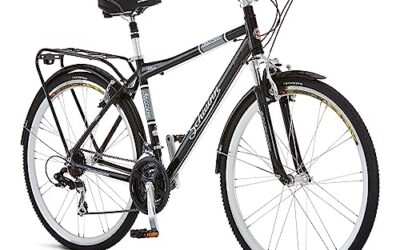
The Schwinn Sanctuary 7 is the most complete beach cruiser in this guide, and the best all-round pick for a rider who wants one bike for the beach, the boardwalk, and the neighbourhood. It is a steel-framed cruiser with 26-inch wheels, a seven-speed rear derailleur with a twist shifter, and front and rear linear-pull brakes. The manufacturer sizes the 26-inch step-through model for riders from five feet to five feet nine inches tall, and a smaller 16-inch frame option is listed for shorter riders, so check the exact frame size on the product page.
The Sanctuary 7 is built for comfort over distance. The padded cruiser saddle has springs, the handlebars are upright and swept back, and the full fenders keep sand and spray off the rider’s clothes. A rear cargo rack is included, which is genuinely useful at the beach for a bag, a towel, or a small picnic. Aluminium alloy rims keep the wheels light for a steel bike and resist corrosion better than steel rims, which matters in salt air. The bike ships ready to assemble and carries a limited lifetime warranty from the manufacturer.
For beach use, the Sanctuary 7’s strengths are its wide, stable tyres, its upright position, and its gear range. Seven speeds make the ride to the beach manageable when the route rises away from the shore, and the twist shifter is simple to use with sandy hands. The fenders matter more at the beach than most riders expect, because they stop wet sand and spray from coating the rider’s back on the ride home. The main trade-off is weight: a steel cruiser is heavier than an aluminium one, so lifting it onto a car rack takes more effort. It is also a 26-inch bike, so a rider under five feet tall should check the smaller frame option or consider the first pick in the small-rider guide rather than this one.
2. sixthreezero EVRYjourney Women’s Steel Step-Through Touring Hybrid Bike, 26-Inch, 3-Speed
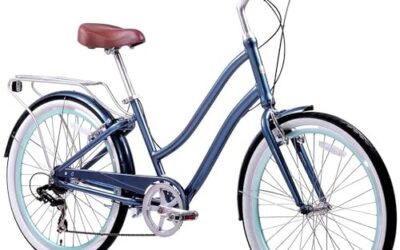
The sixthreezero EVRYjourney Steel is the relaxed, upright option in this guide, and the best pick for a rider who wants a simple beach bike with a low step-through frame and a minimum of maintenance. It is a steel step-through hybrid cruiser with 26-inch wheels and a three-speed drivetrain, and the manufacturer states a minimum rider height of five feet for this model. The frame is low and easy to step through, the riding position is upright, and the bike comes with a rear rack and full fenders included.
The three-speed drivetrain suits flat beach terrain. There are enough gears for a gentle slope or a headwind along the promenade, and few enough that the drivetrain stays simple to keep clean after sandy rides. The tyres are wide enough to feel stable on packed sand and boardwalk, and the bike’s overall character is calm and unhurried: this is a bike for cruising the shoreline, not for covering distance quickly. The steel frame absorbs vibration from boardwalk planks and rough paths well, and the included rack and fenders mean nothing essential has to be bought separately.
The trade-offs follow from the same choices that make it simple. Three speeds are not enough for a hilly route to the beach, so a rider whose journey includes real climbs should prefer the seven-speed Sanctuary 7 above. Steel is heavier than aluminium, and the bike’s weight is noticeable when lifting it. The EVRYjourney Steel is at its best on flat coastal routes, where its comfort, simplicity, and low step-through frame matter more than gear range or weight.
3. Firmstrong Chief Lady Beach Cruiser Bicycle, 26-Inch, 3-Speed
The Firmstrong Chief Lady is the pick for taller riders in this guide, and the one that solves a problem the other two do not: most beach cruisers are built for average-height riders, and a tall rider on a standard cruiser ends up with knees too high and a cramped reach. The Chief Lady uses an elongated 19-inch steel frame with a forward pedalling design, which keeps the saddle close to the ground while giving long legs proper extension. The manufacturer sizes it for women from five feet four inches to six feet four inches tall, which makes it the right choice for a rider above five feet six inches who has found standard cruisers too small.
The rest of the specification is classic beach cruiser: 26-inch aluminium wheels, whitewall balloon tyres for a cushioned ride over bumps and packed sand, a wide saddle with dual springs, and a curvy steel frame in the traditional beach style. The three-speed version uses a rear coaster brake, which keeps the controls simple and encloses the braking mechanism away from sand and salt, while the seven-speed version adds front and rear handbrakes for finer control and better hill climbing. The bike arrives mostly assembled, with final assembly of the handlebars, saddle, pedals, and front wheel left to the buyer.
The Chief Lady’s limits are the ones that come with its size. The elongated frame is built for taller riders, so a rider under five feet four inches should not choose it; the standard Firmstrong Urban Lady in a smaller size is the right alternative. The steel frame is heavy, and the bike’s shipping weight is substantial, so lifting it onto a rack is a two-person job for many riders. For a tall rider who wants a proper-fitting beach cruiser with balloon tyres and a relaxed, upright position, though, it is the best-fitting bike in this guide.
Quick Comparison
| Bike | Wheel size | Stated rider height | Speeds | Frame |
|---|---|---|---|---|
| Schwinn Sanctuary 7 | 26-inch | 5 ft to 5 ft 9 in | 7 | Steel step-through |
| sixthreezero EVRYjourney Steel | 26-inch | From 5 ft | 3 | Steel step-through |
| Firmstrong Chief Lady | 26-inch | 5 ft 4 in to 6 ft 4 in | 3 | Steel, elongated frame |
Riding on Sand: What Works and What Does Not
The firm, damp sand near the waterline at low tide is rideable on the wide tyres in this guide, and it is the most enjoyable part of beach riding. The sand is packed, the surface is smooth, and the wide tyres stay on top. Ride at a steady pace, keep the handlebars loose rather than gripping them tightly, and avoid sudden turns, because the front wheel can wash out on a soft patch. If the front wheel starts to sink, shift weight back slightly, keep pedalling smoothly, and steer gently toward firmer sand.
Dry, loose sand above the high-tide line is a different matter. It is deep, soft, and slow, and even wide cruiser tyres sink and spin in it. Do not fight it: dismount and walk the bike through the soft section, or ride on the packed path beside the beach instead. Boardwalk planks and paved promenades are the easiest surfaces of all, and all three bikes in this guide are happiest there. Concrete and asphalt paths along the shore are ideal for a cruiser, and the wide tyres smooth out expansion joints and small cracks.
Tyre pressure matters on sand. Slightly lower pressure than the maximum printed on the sidewall increases the contact patch and improves flotation on soft surfaces, but too low a pressure risks a pinch flat on a boardwalk edge or a kerb. A practical approach is to run the tyres near the middle of their stated range for mixed riding, and to lower them a little only for a deliberate stretch on firm sand, then restore normal pressure afterwards. Carry a small pump if you plan to adjust pressure at the beach.
Caring for a Bike After Beach Rides
Salt and sand are the two things that shorten a beach bike’s life, and the care routine is simple enough to do every time. Rinse the bike with fresh water after each beach ride, paying attention to the chain, the brakes, the spokes, and the underside of the frame where sand collects. Do not use a high-pressure jet, which drives grit into bearings; a gentle rinse from a hose or a watering can is enough. Dry the chain with a cloth and re-lubricate it, because a wet chain rusts quickly in salt air. Wipe the frame and rims dry, and check the brake pads for embedded sand, which wears rims and reduces braking.
Store the bike under cover and out of direct salt spray when it is not being ridden. A bike left outdoors near the beach corrodes far faster than one stored in a garage or hallway, even with regular rinsing. Check the chain, cables, and spoke tension more often than you would for a bike ridden only inland, and replace the chain when it shows rust or stiff links rather than waiting for it to fail. These habits cost a few minutes after each ride and add years to a beach bike’s life.
What to Pack for a Beach Ride
A beach ride needs a little more kit than a neighbourhood ride. Bring water, because riding in sun and sea air is dehydrating, and a small bag or basket for a towel, sunscreen, and a lock. A lock matters at the beach: a bike left unattended near a crowded shore is an easy target, so lock the frame and at least one wheel to a fixed rack or rail. Wear sunscreen and a hat under the helmet, and remember that sand in the drivetrain after the ride is normal; the rinse routine above deals with it. If you ride on the firm sand near the water, check the tide times before you set out, because the rideable strip narrows quickly as the tide comes in.
What to Avoid
Avoid riding a narrow-tyred road bike or a lightweight hybrid on soft sand; the tyres will sink, the steering will feel unstable, and the ride will be frustrating. Avoid leaving any bike unrinsed after a beach ride, because salt corrosion starts quickly and is much harder to reverse than to prevent. Avoid overloading the rear rack with heavy beach gear on a cruiser, which is built for comfort rather than load carrying; a small bag is fine, a full cool box is not. Finally, avoid riding on dunes or through protected beach vegetation, which damages the environment and is restricted in many areas. Stay on the firm sand, the paths, and the boardwalk.
Final Recommendation
For most beach riders, the Schwinn Sanctuary 7 is the best starting point: it has seven speeds for the ride to and from the shore, full fenders and a rear rack included, and a step-through frame sized for riders from five feet to five feet nine inches. If your riding is flat and you want the simplest possible bike, the three-speed sixthreezero EVRYjourney Steel offers the same relaxed cruiser feel with fewer parts to maintain. If you are a taller rider who has found standard cruisers too small, the Firmstrong Chief Lady is built for riders from five feet four inches to six feet four inches and fits where the others do not. Whichever you choose, ride the firm sand, rinse the bike afterwards, and check the stated height range for the exact size before you order.