Key takeaways
- Searching for the best 120mm full suspension bike 2? We compare three full-suspension mountain bikes on Amazon and flag where each one meets the 120mm mark.
Shopping for the best 120mm full suspension bike 2 is trickier than it first looks. A 120mm full-suspension mountain bike sits in the sweet spot between cross-country efficiency and trail capability: enough travel to smooth out roots and rocks, but not so much that every climb feels like dragging an anchor. The catch is that very few complete bikes sold on Amazon carry exactly 120mm of travel at both ends, and listings do not always spell out front and rear travel separately. Some bikes have a 120mm fork with a shorter-travel rear shock, others are close at 110mm, and a few never publish a travel figure at all.
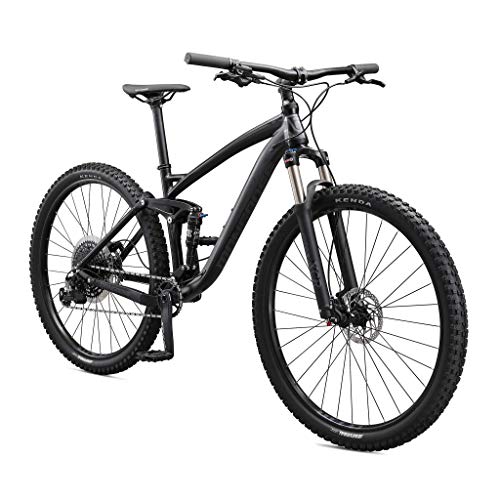
This guide takes an honest approach. Below you will find three full-suspension mountain bikes that are actually sold on Amazon, each with its real travel numbers stated plainly. Where a bike falls short of a true 120mm front and rear setup, we say so in the review itself, so you can decide whether close enough is good enough for the trails you ride.
Quick answer: the Diamondback Atroz 2 is the closest match in this roundup, with a 120mm fork up front and a shorter-travel rear shock, making it the best starting point for most riders. The Schwinn Traxion is the most affordable full-suspension option of the three, though its travel figure is not published as 120mm. The Mongoose Salvo Comp 29 is the most trail-capable build here, running 100mm up front and 110mm at the rear. If you need exactly 120mm at both ends, check the travel numbers on the listing before ordering, because none of these three is a perfect 120mm and 120mm match.
Quick Picks
| Bike | Wheels | Drivetrain | Travel | Best For |
|---|---|---|---|---|
| Diamondback Atroz 2 | 27.5 inches | 11-speed | 120mm fork, shorter rear travel | Closest to 120mm overall |
| Schwinn Traxion | 29 inches | 24-speed Shimano | Full suspension, travel figure not published as 120mm | Affordable first full-suspension bike |
| Mongoose Salvo Comp 29 | 29 inches | 12-speed SRAM SX | 100mm fork, 110mm rear | Most trail-capable build |
How to Choose
A 120mm full-suspension bike is a compromise by design, and the right one depends on where and how you ride. Work through the points below before you commit to a listing.
Front and Rear Travel Numbers
Travel is measured separately at the fork and at the rear shock, and the two numbers are often different. A bike marketed as a 120mm bike may have a 120mm fork paired with a 100mm rear shock, or the reverse. Read both figures on the listing or the manufacturer’s spec sheet. For general trail riding, a fork in the 110mm to 130mm range with a rear shock in the 100mm to 120mm range gives a balanced, efficient ride. If you regularly ride rough, rocky descents, favor more rear travel; if you climb fire roads most of the time, a shorter-travel rear end will pedal more efficiently.
Wheel Size: 27.5 Inches or 29 Inches
Wheel size changes how a bike feels more than most riders expect. A 27.5-inch wheel accelerates quickly, feels nimble in tight switchbacks, and suits shorter riders well. A 29-inch wheel rolls over roots and rocks with less effort, holds momentum on flat and rolling terrain, and suits taller riders. Two of the bikes in this roundup use 29-inch wheels, while the Diamondback uses 27.5-inch wheels. Neither size is better in every situation, so match the wheel to your height and to the trails you ride most.
Frame Material and Weight
Most full-suspension bikes in this class use an aluminum frame, which keeps the build sturdy and the cost reasonable. Carbon frames are lighter and stiffer, but they are rare at this end of the market and usually appear on direct-to-consumer brands with thinner dealer support. Weight matters on climbs and when you have to carry the bike over an obstacle, but a few extra pounds matter less than a frame that fits you and suspension that works properly. Check the listed weight and the maximum rider weight recommendation before ordering.
Drivetrain and Gear Range
A 120mm trail bike needs enough gears to climb steep pitches without grinding and to keep up on flat sections. A modern 1×12 drivetrain, with a single chainring up front and twelve gears at the rear, gives a wide range with simple shifting and less to maintain. Older 2x or 3x drivetrains, such as the 24-speed setup on the Schwinn Traxion, still work well and give plenty of ratios, but they add a front derailleur and a second shifter to manage. Either layout can serve a trail rider; the wider the gear range, the easier steep climbs become.
Brakes
Disc brakes are standard on every bike in this roundup, and they should be non-negotiable on a full-suspension trail bike. Hydraulic disc brakes give stronger stopping power with less finger effort and better control on long descents, while mechanical disc brakes are simpler to adjust at home and cheaper to service. Larger rotors, typically 160mm or 180mm, dissipate heat better on sustained downhills. If your local trails include long descents, hydraulic brakes are worth prioritizing.
Fit and Frame Size
A full-suspension bike that does not fit will feel awkward no matter how good its components are. Manufacturers publish a recommended rider height range for each frame size, and you should treat that range as a hard limit rather than a suggestion. Stand-over height matters too: you need clearance between the top tube and your body when you stop on uneven ground. If you fall between two sizes, the smaller frame usually feels more playful and easier to handle, while the larger frame feels more stable at speed.
Assembly and Support
Complete bikes from Amazon arrive partially assembled, typically around 85 to 95 percent built, with the front wheel, handlebar, seatpost, and pedals to attach. Budget time for assembly and a full safety check of the brakes, shifting, and suspension before your first ride. If you are not comfortable adjusting derailleurs and brakes, plan on a visit to a local bike shop for a professional assembly and tune. Also confirm the return window and warranty terms on the listing before ordering, because a bicycle is a large item to send back.
The Best best 120mm full suspension bike 2 Reviewed
Diamondback Atroz 2
ASIN: B08JV1Z1RD — Check on Amazon
The Diamondback Atroz 2 is the closest thing to a 120mm full-suspension bike in this roundup, and it earns the top spot on that basis. Its aluminum trail frame is built around a 120mm suspension fork, which puts the front end exactly on the number this guide is about, and a RockShox Monarch R rear shock handles the back of the bike. The rear shock delivers less travel than the fork, with the Atroz platform historically listed at around four inches of rear travel, so this is a partial fit rather than a perfect 120mm front and rear match. If you want the 120mm figure where it matters most for absorbing trail hits, the fork delivers it; if you need 120mm at the rear as well, keep looking.
The rest of the build is solid for an entry-level trail bike. The 27.5-inch wheels keep the bike nimble in tight terrain, and the 11-speed drivetrain gives a useful spread of gears for climbing and cruising. A single-pivot rear suspension design keeps the layout simple and durable, with fewer bearings and pivots to maintain than a multi-link system. The frame uses butted 6061-T6 aluminum, a proven material for trail frames, and the bike ships mostly assembled, so the remaining setup is straightforward for anyone with basic tools.
Where the Atroz 2 stands out is its balance. It is light enough to climb without feeling sluggish, composed enough on descents to build confidence, and simple enough to maintain at home. The 27.5-inch wheels suit riders who value quick handling over maximum rollover ability, and the RockShox fork and shock are both name-brand components that a bike shop can service. This is the bike to pick if you want a genuine trail bike with a 120mm fork and you can accept a shorter-travel rear end.
Schwinn Traxion
ASIN: B06XWYS3NN — Check on Amazon
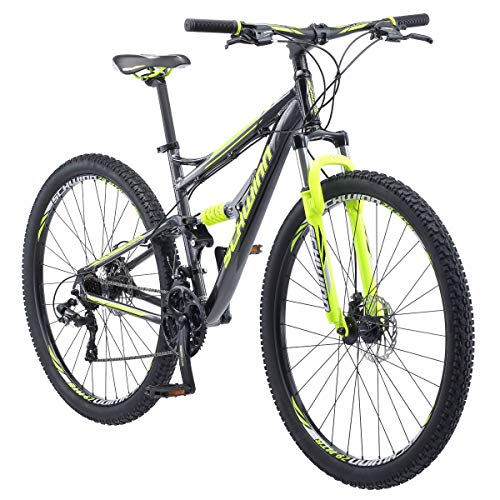
The Schwinn Traxion is the most affordable full-suspension bike in this roundup, and it is the easiest entry point into dual-suspension riding. It pairs a lightweight aluminum dual-suspension frame with 29-inch wheels, a 24-speed Shimano drivetrain with trigger shifters, and mechanical disc brakes. The 18-inch frame and 29-inch wheels suit taller riders and anyone who rides mixed surfaces, from paved paths and gravel to light trails. Schwinn does not publish a 120mm travel figure for this bike, so it is a partial fit for this roundup: it is a genuine full-suspension mountain bike, but its suspension travel is not confirmed at 120mm, and buyers who need that exact number should verify the fork and shock specifications on the listing before ordering.
What the Traxion does well is comfort. The dual suspension smooths out rough pavement, gravel, and mild trail chatter, and the upright, relaxed geometry makes it easy to ride for long stretches without feeling stretched out. The 24-speed drivetrain gives plenty of ratios for hills, and the 29-inch wheels roll efficiently over small obstacles. Owner reports put the weight at around 49 pounds, which is heavy for a trail bike, so this is not the pick for riders who plan to climb steep singletrack or carry the bike over trail features.
The Traxion makes the most sense for a specific rider: someone who wants full suspension mainly for comfort on neighborhood rides, gravel roads, and light trails, and who values a low entry cost over aggressive trail capability. It is not built for hard off-road use, and its components will need regular adjustment and maintenance. For that rider, though, it delivers a forgiving ride that a hardtail at the same level of build simply cannot match.
Mongoose Salvo Comp 29
ASIN: B084HJP375 — Check on Amazon
The Mongoose Salvo Comp 29 is the most trail-capable bike in this roundup, and it is the pick for riders who want the strongest component package of the three. It uses an aluminum frame with Mongoose’s Free Floating Technology rear suspension, a Horst-link design that limits suspension interference under braking, paired with 29-inch wheels and knobby 2.25-inch trail tires. The drivetrain is a 12-speed SRAM SX Eagle setup with a trigger shifter, and hydraulic disc brakes provide strong, controlled stopping power. This is a partial fit for the 120mm target: the current 29-inch Salvo Comp runs a 100mm fork with 110mm of rear travel, close to 120mm but not exactly on the number, so confirm the travel figures on the listing if an exact 120mm setup is a hard requirement.
On the trail, the Salvo Comp behaves like a proper cross-country and trail bike. The 12-speed drivetrain gives a wide gear range with a single chainring, which simplifies shifting and keeps the cockpit clean. The hydraulic brakes are a meaningful step up from mechanical discs, especially on long descents where finger fatigue becomes a real factor. The Horst-link rear suspension stays active under braking, which helps the rear wheel track the ground through rough corners instead of skipping.
Fit is worth checking carefully here. The small frame in this listing suits riders roughly 63 to 67 inches tall, so taller riders should look for the medium or large frame versions of the same model. The Salvo Comp is the heaviest hitter in this roundup in terms of trail intent, and it is the best choice if your riding leans toward real singletrack rather than paved paths and gravel. Just go in knowing the travel numbers are 100mm and 110mm, not a full 120mm at both ends.
What to Check Before You Buy
Before you order any full-suspension bike online, run through this checklist. First, confirm the exact travel numbers on the Amazon listing itself, because third-party roundups and older reviews may describe a different model year with different suspension. Second, match the frame size to the manufacturer’s rider-height chart and double-check the wheel size, since some models are sold in both 27.5-inch and 29-inch versions under similar names. Third, read the listing for what is included: some bikes ship with pedals and tools, others do not, and a missing pedal set will delay your first ride. Fourth, check the return policy and the warranty terms, and keep the original packaging until you have ridden the bike and confirmed everything works. Fifth, budget for a professional assembly or tune if you are not confident adjusting brakes and derailleurs yourself, and inspect the suspension, headset, and wheels for play or damage on arrival. Finally, remember that a bike’s listed weight and travel figures describe the complete bike as sold, and swapping components later will change both.
FAQ
What does 120mm of travel actually mean?
Travel is the distance the suspension can compress, measured in millimeters. A 120mm fork can compress 120mm from full extension, and a 120mm rear shock setup allows the rear wheel a similar range of movement. More travel absorbs bigger hits, while less travel keeps the bike lighter and more efficient when pedaling. A 120mm bike sits in the middle: enough suspension for real trails, but still efficient on climbs.
Is a 120mm full-suspension bike good for beginners?
Yes, a 120mm full-suspension bike is a good choice for a beginner who rides real trails. The suspension forgives mistakes, smooths out rough ground, and builds confidence faster than a hardtail. The trade-off is weight and maintenance: a full-suspension bike is heavier and has more moving parts to look after. Beginners who ride mostly pavement and smooth gravel may be happier with a hardtail or a simpler dual-suspension comfort bike.
Can I ride a 120mm bike on downhill trails?
A 120mm bike can handle moderate downhill sections, flow trails, and technical singletrack, but it is not a downhill bike. Sustained steep descents with large drops and jumps call for 150mm or more of travel, burlier tires, and a slacker head angle. If your local trails include lift-served downhill runs, a 120mm bike will feel under-gunned. For everything up to aggressive trail riding, 120mm is plenty.
Do these bikes arrive fully assembled?
No. Complete bikes ordered online arrive partially assembled, usually with the front wheel, handlebar, seatpost, and pedals to attach. Most riders can finish the job with the included tools in under an hour, but brakes and shifting often need fine-tuning after assembly. A bike shop can handle the full setup and safety check if you prefer to have it done professionally.
What frame size should I choose?
Use the manufacturer’s rider-height chart for the exact model you are buying, and measure your height and inseam before ordering. If you fall between two sizes, choose the smaller frame for a more playful, maneuverable feel, or the larger frame for more stability at speed. Stand-over clearance matters too, especially on full-suspension frames where the top tube sits higher than on a hardtail.
Bottom Line
The best 120mm full suspension bike 2 for most riders is the Diamondback Atroz 2, because its 120mm fork puts the front end exactly on the target number and its overall build is the most balanced trail package of the three. The Mongoose Salvo Comp 29 is the strongest choice for riders who prioritize trail capability and modern components, even though its travel measures 100mm at the fork and 110mm at the rear. The Schwinn Traxion is the right pick when budget and comfort matter more than an exact travel figure, and when the riding is mostly light trails and mixed surfaces. None of the three is a perfect 120mm front and rear match, and that is worth knowing before you buy: confirm the travel numbers on the listing, choose the frame size from the manufacturer’s height chart, and plan on a proper assembly and safety check before your first ride.
Disclosure: As an Amazon Associate, we may earn from qualifying purchases.