We independently review everything we recommend. When you buy through our links, we may earn a commission. As an Amazon Associate we earn from qualifying purchases.
Best Snow Machine Helmet
Compare the best snow machine helmets for snowmobile riding: modular and full-face picks with heated electric shields, breath boxes and DOT-certified shells.
Compare the best snow machine helmets for snowmobile riding: modular and full-face picks with heated electric shields, breath boxes and DOT-certified shells.
Disclosure: As an Amazon Associate, we may earn from qualifying purchases made through links on this page, at no additional cost to you.
OUR TOP PICK
Castle X CX950 V2 Modular Electric Snow Helmet (ASIN
“Snow machine” is what riders in Alaska and much of the northern snow belt call a snowmobile, and a snow machine helmet is built for a job no ordinary motorcycle helmet is designed to do. It has to keep your vision clear when your warm breath meets sub-freezing air, seal out wind chill at trail speed, and stay comfortable through hours of cold. The features that separate a true snow helmet from a street helmet are the shield system — dual-pane or electrically heated lenses that resist fog and frost — plus a breath box that routes exhaled air away from the lens and a chin curtain that blocks cold air from sweeping up under the shell.
This guide compares three snowmobile helmets that approach the problem differently: a modular Castle X with an electric shield, a full-face Vega with a heated shield and an amber drop-down visor, and a full-face ILM that fights fog with a Pinlock insert and accepts an optional heated snow shield. All three are DOT-certified designs sold for snow use. Read the shield, fit, and ventilation details closely, because on a snow machine the right fog management matters as much as the shell itself.
Quick Picks
Castle X CX950 V2 Modular Electric Snow Helmet (ASIN: B0B8T7MDT1) — modular flip-up design with an electric dual-pane shield, breath box, and chin curtain for cold trail days.
Vega V-Star Snowmobile Helmet with Electric Heated Shield (ASIN: B0CQPQ3NYH) — fixed full-face helmet with an electric heated shield and an amber drop-down shield for flat light.
ILM Full Face Helmet Model 129 (ASIN: B08JGRYZRR) — full-face helmet with a Pinlock fog-resistant insert, breath box, and compatibility with an optional electric heated snow shield.
Castle X CX950 V2 Modular Electric Snow Helmet (ASIN: B0B8T7MDT1)
Top Pick
Castle X CX950 V2 Modular Electric Snow Helmet (ASIN: B0B8T7MDT1)
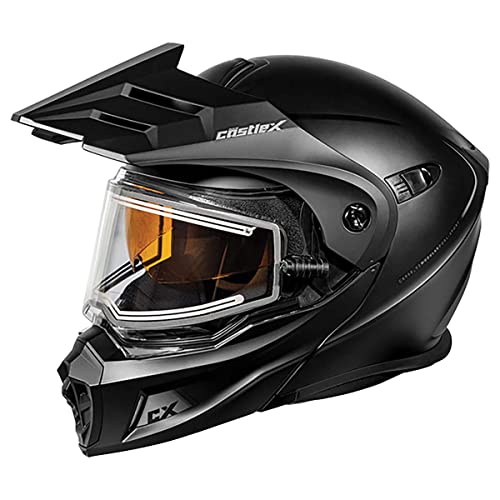
The Castle X CX950 V2 is a modular snow helmet built around an electric shield. Its shell is polycarbonate with an expanded polystyrene inner liner, and the listing gives dimensions of 15 x 11.25 x 11.5 inches and a weight of 5 pounds for the Medium size in Matte Black. The chin bar flips up, so you can talk, take a drink, or clear a trail sign without removing the helmet, and the helmet carries a DOT Certified safety rating. Castle X lists the helmet’s athlete category as snowmobiling, and the adjustable strap and modular format are aimed at riders who stop often on the trail.
The cold-weather hardware is the real story. The CX950 V2 in this electric configuration uses a dual-pane electric shield that plugs into the sled with the included power cord kit, warming the lens surface so breath moisture does not freeze into frost. A removable breath box directs exhaled air down and away from the shield, and a cold-weather chin curtain seals the gap under the chin bar. An internal drop-down sun visor handles bright glare off open snowfields without a shield swap.
Highlights
– Modular flip-up chin bar for stops, conversation, and quick breaks
– Electric dual-pane shield with power cord kit for fog and frost control
– Removable breath box and cold-weather chin curtain included
– DOT Certified polycarbonate shell with EPS liner
– Drop-down sun visor for bright, flat-light riding
Considerations
– At 5 pounds it is not the lightest option here, which matters on long days
– The electric shield needs a working power connection on your sled
– The product page lists recommended use as motorcycling even though the model is Castle X’s electric snow helmet line, so confirm the snow configuration on the listing before ordering
Vega V-Star Snowmobile Helmet with Electric Heated Shield & Amber Dropdown Shield (ASIN: B0CQPQ3NYH)
Runner-Up
Vega V-Star Snowmobile Helmet with Electric Heated Shield & Amber Dropdown Shield (ASIN: B0CQPQ3NYH)
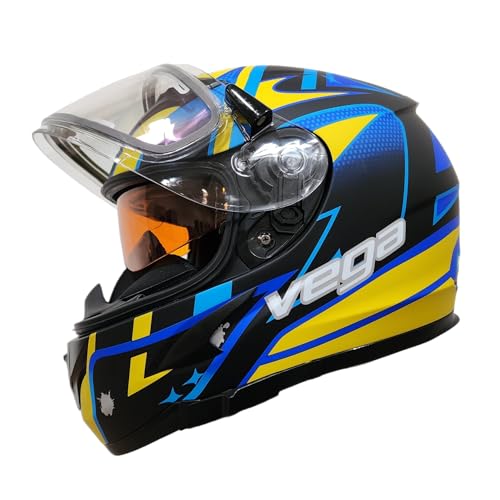
The Vega V-Star is a fixed full-face snowmobile helmet, and its product page states the recommended use plainly: snowmobiling. The shell is acrylonitrile butadiene styrene (ABS) over an expanded polystyrene inner liner, with dimensions of 14 x 11 x 11 inches and a weight of 5 pounds in the Large size shown, finished here in Blue Evolution. The model number is 52230-024, and Vega lists lightweight construction as the helmet’s special feature. A fixed chin bar gives the V-Star the simpler, quieter structure many trail riders prefer, with no hinge or latch to manage with heavy gloves.
Visibility hardware is where the V-Star earns its place. The main shield is electrically heated, plugging into the snowmobile to keep the lens warm and clear in deep cold, and a second amber drop-down shield sits inside for flat-light conditions, when grey skies wash out the contrast of drifts and trail edges. Amber lenses are a long-standing snow rider trick for exactly that light, and having one built in means you do not have to stop and swap shields when the light goes flat.
Highlights
– Purpose-built full-face snowmobile helmet, per the product page
– Electric heated main shield for frost-free vision in deep cold
– Built-in amber drop-down shield for flat-light contrast
– ABS shell with EPS liner, 14 x 11 x 11 inches
– Fixed chin bar means fewer moving parts to ice up or wear
Considerations
– The fixed chin bar cannot flip up at stops like a modular can
– The heated shield depends on a sled power connection and cord management
– The page extract lists limited ventilation detail, so check the listing for vent layout if airflow is a priority
The ILM-129 is a full-face helmet that ILM markets directly to snowmobile riders: the product page states it is ideal for riders including snowmobile use, and lists snowmobile among its compatible vehicle types. The shell is ABS with a high-density EPS liner, the certificate type is DOT, and the listed weight is 2.09 kilograms in Matte Black. Instead of a heated lens, the ILM fights fog with a Pinlock 30 insert, a second inner lens layer that keeps the main visor fog-resistant and maintains a clear view on cold days.
The supporting cold-weather kit is well thought out. A removable breath box deflects your breath away from the shield, a removable chin curtain blocks cold air at the neck, and the ventilation system uses three closable intake vents with a rear exhaust vent. Inside, the 3D liner is removable and washable, there are pockets for communication system speakers, and the design is eyewear friendly. For riders who later want a heated lens, ILM offers an electric heated snow shield accessory with an extra-long, fuse-protected split cord that works with all snowmobiles, sold separately from the helmet.
Highlights
– ASIN field and buying options confirmed on the product page
– Pinlock 30 insert keeps the visor fog-resistant without any wiring
– Breath box and chin curtain included for cold-weather sealing
– Three closable intake vents plus a rear exhaust vent
– Speaker pockets and an eyewear-friendly fit
– Optional electric heated snow shield available for the same model
Considerations
– The heated shield is a separate accessory, not included with the helmet
– The Pinlock insert manages fog but cannot melt frost already formed like a heated lens can
– ILM advises following its own size chart on the page, noting a system error can affect the displayed sizing
How to Choose
Start with the shield, because fog is the number one ride-ender on a snow machine. An electric heated shield, like the ones on the Castle X and the Vega, actively warms the lens and is the strongest defense in deep cold and on long, steady trail rides. A dual-pane unheated shield or a Pinlock insert, like the ILM’s, traps an insulating air layer and works well for shorter rides and moderate cold, with no cord to connect. If your sled lacks a convenient power outlet, a Pinlock or dual-pane setup avoids the wiring question entirely.
Next, pick your format. A modular helmet like the CX950 V2 flips up at fuel stops and trail breaks, which many riders love, but the hinge adds weight and one more mechanism to keep ice-free. A full-face helmet like the V-Star or the ILM-129 is simpler and typically quieter. Whichever format you choose, look for a breath box and a chin curtain in the box: together they do more for everyday fog control than any coating, because they keep moist breath off the lens and cold air out of the helmet.
Finally, fit and certification. Every helmet here is DOT certified, and you should confirm the certification label on the helmet you receive. Measure your head circumference and follow the manufacturer’s own size chart rather than assuming your motorcycle helmet size carries over, since cold-weather helmets are often worn with a balaclava that changes the fit.
Key Specifications Explained
Electric heated shield: A shield with a heating element around its edge, powered by a cord connected to the snowmobile. It keeps the lens surface above the frost point so moisture from your breath cannot freeze on it.
Dual-pane shield: Two lens layers sealed with an air gap between them, like a double-glazed window. The gap insulates the inner lens, slowing fog formation without any power.
Pinlock insert: A removable inner lens that pins to the inside of the main shield, creating the same insulating air pocket as a dual-pane shield. The ILM-129 uses a Pinlock 30 insert.
Breath box: A fitted mask inside the chin bar that seals around your nose and mouth and vents exhaled air downward, away from the shield. It is the single most effective passive anti-fog feature.
Chin curtain: A fabric or mesh panel under the chin bar that blocks cold air from rushing up into the helmet at speed, reducing both chill and fog from temperature swings.
DOT certification: The helmet meets the US Department of Transportation FMVSS 218 standard. All three helmets in this guide list DOT certification on their product pages.
Setup and Use Tips
Before the first ride, fit the breath box carefully. It should seal against your face without pressing hard on your nose, and its exhaust should point down and out. A poorly seated breath box leaks warm air straight onto the shield and defeats its own purpose. Try the helmet on with the balaclava you actually ride in, and check that the shield closes fully and the drop-down visor, if fitted, clears your glasses.
If your helmet has an electric shield, route the cord before you ride: connect it, turn the bars lock to lock, and make sure there is slack without loose loops that can snag. Keep the shield’s electrical contacts clean and dry, and carry the habit of disconnecting before you step off the sled so the cord is not yanked. For Pinlock inserts, handle the inner lens by its edges only, and reseat it if the seal against the main shield shows gaps.
After each ride, open the vents, remove the breath box if it is damp, and let the liner air-dry at room temperature. Never dry a helmet on a heat source, which can damage the EPS liner.
Common Mistakes to Avoid
The most common mistake is buying a plain motorcycle helmet for snow use. A single-pane street shield with no breath box will fog and frost within minutes in real cold, no matter how good the helmet is on the road. Snow helmets exist as a category precisely because the shield and breath management are different.
A second mistake is sizing up to fit a thick balaclava and ending up with a loose helmet the rest of the time. Choose the helmet that fits your head correctly with your usual riding layers, and use thinner headwear if you need room. Third, riders often ignore the cord: an electric shield that is unplugged, or plugged into a dead outlet, is just a dual-pane shield, so verify the sled’s power point works before the trip. Finally, do not store the helmet with a damp liner sealed in a bag, which breeds odor and degrades the comfort padding.
FAQ
What makes a snow machine helmet different from a motorcycle helmet?
The shield system and breath management. Snow helmets use dual-pane or electrically heated shields, a breath box, and a chin curtain to stop fog and frost, and they seal against wind chill. A street helmet’s single-pane shield fogs quickly in deep cold.
Do I need an electric heated shield?
Not always. For long rides in severe cold, a heated shield like those on the Castle X CX950 V2 and Vega V-Star is the most reliable option. For shorter rides or moderate cold, a Pinlock insert like the ILM-129’s can be enough, with no cord to manage.
Can I wear glasses under these helmets?
The ILM-129 is explicitly eyewear friendly and has speaker pockets as well. With any helmet, a modular flip-up like the Castle X also makes putting glasses on easier. Check the fit with your own frames before a long ride.
How should a snowmobile helmet fit?
Snug all around, with no pressure hotspots, and it should not rotate when you shake your head. Measure your head circumference and use the manufacturer’s size chart on the product page, since sizing varies between brands.
What should I check on the helmet I receive?
Confirm the DOT certification label, check that the shield, breath box, and any power cord listed on the product page are in the box, and verify the shield heating element works by connecting it before your first ride.
Final Verdict
For most trail riders, the Castle X CX950 V2 is the most complete package here: a modular format, an electric dual-pane shield with its cord kit, a breath box, and a chin curtain in one DOT-certified helmet. The Vega V-Star suits riders who prefer a fixed full-face design and ride in flat light, thanks to its heated shield and built-in amber drop-down. The ILM-129 is the flexible choice: its Pinlock insert and included breath box handle cold days without any wiring, and the optional heated snow shield lets you upgrade later. Match the shield system to your cold and your sled’s power setup, get the fit right, and any of the three will keep your vision clear where a street helmet cannot.
W
Wildshot Editorial Team
We compare specs, materials and verified owner reviews before a product earns a spot. Rankings are never paid.
Affiliate disclosure. As an Amazon Associate we earn from qualifying purchases at no extra cost to you. Prices accurate as of the date shown.
Five rose supports whose own listings name climbing roses, from a wrought iron obelisk to compact pot trellises, with sizing and rust notes for each pick.
Four dual motor uprights for wide hallways, all from the one line whose listings state a 2-motor system, compared on bags, lift-up design, and pet tools.
Three loading ramp pairs for zero turn mowers compared on rated capacity, length, arch design and surface grip from their Amazon listings, for trucks and trailers.

 ILM Full Face Helmet Model 129 (ASIN: B08JGRYZRR)